Carlisle Hellcat: the 21-jet totally surface-mix two-stage burner
Carlisle Hellcat · Bench torch · Surface mix
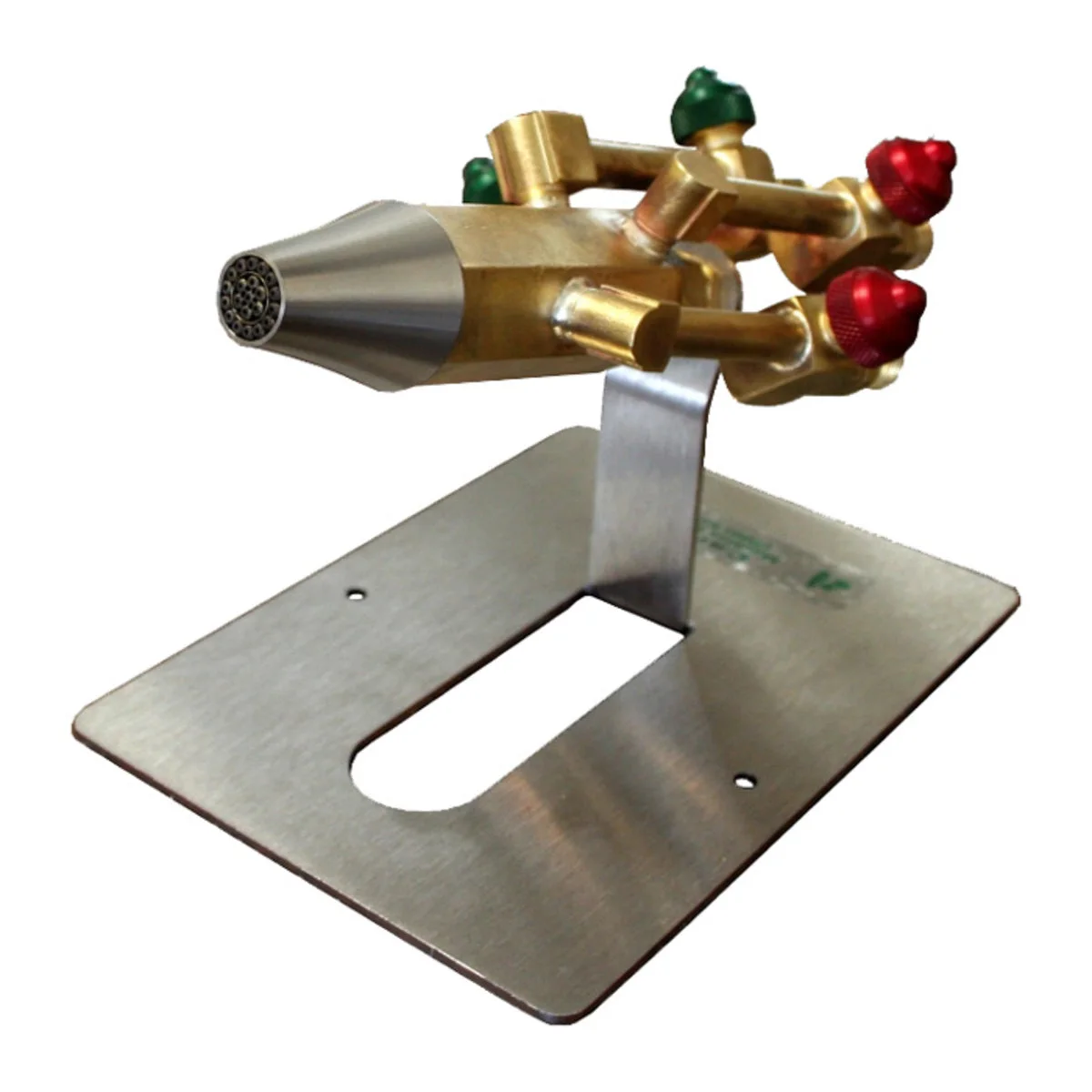
The Carlisle Hellcat is a fully surface-mix, 4-inlet bench torch with 7 center tubes plus 14 on the outer fire (21 total) — run the center alone for fine work or both fires for heavy heat, all without the combination CC's backfire quirk.
Specs
- Mix type
- Surface mix
- Mount
- Bench
- Oxygen
- 7–21 LPM
- Fuel
- Propane, Natural gas, Hydrogen
- Skill level
- Intermediate, Advanced
- Glass
- Soft, Boro
- Best for
- General, Soft glass, Boro
- Price
- High ($$$) $$$
- Jets
- 21
- Stages
- 2
Overview
The Carlisle Hellcat is a totally surface-mixed, 4-inlet bench burner that covers a wide range from one torch. It carries 7 tubes in the center plus 14 on the outer fire (21 total): run the center alone for smaller, focused work, or bring in the outer fire for heavy heat. Unlike the combination CC, both fires are surface-mix, so it’s calmer and less prone to backfire.
The flame
Everything on the Hellcat mixes at the face — it’s pure surface-mix, with no premix center. The big advantage over a combination torch is manners: it’s quieter and far less likely to produce the backfire ‘pop’ the CC can. The two fires give it real range, from a tight center flame to a broad two-fire flame. For the broader picture, see surface mix vs premix torches.
Two fires, one torch
This is the Hellcat’s standout trait. The 7-tube center fire runs on its own at modest oxygen for finer work; bring in the 14-tube outer fire and you have a big, hot two-fire flame. The 4-inlet design lets the fires be metered independently, which suits foot-controller setups and gives you separate command of center and outer. A stainless nose cone and a stand that sets the head at 45 degrees round it out.
Who it’s for
The Hellcat suits intermediate-to-advanced makers who want one torch that scales from small to large across soft glass and boro. A patient beginner could learn on the center fire alone, but the full two-fire torch is more than most first-timers need — the gentler Mini CC is the easier starting point. If you’re mapping the range, see how to choose a glass torch.
Glass, fuel & oxygen
The Hellcat handles soft (soda-lime) glass and boro, and burns propane, natural gas, or hydrogen with oxygen. Its appetite depends entirely on how you run it: Carlisle lists the center fire only at about 1.5 LPM propane and 7 LPM oxygen, and both fires at about 4.5 LPM propane and 21 LPM oxygen, with recommended pressures of 2-3 psi gas and 5 psi oxygen. Running both fires is a serious oxygen draw, so plan your supply around the way you intend to work — see how many LPM does my torch need and oxygen concentrator vs tanks.
Where it sits in the Carlisle lineup
The Hellcat is Carlisle’s totally surface-mix, two-fire answer to makers who want CC-family range without the combination design’s backfire quirk. It sits alongside the combination CC, CC+, and CC++ and the surface-mix Mini CC and Wildcat as one of the more versatile burners in the catalog.
Before you buy
Budget for the whole system, not just the torch — and size your oxygen for the big flame, not just the small one. Plan for up to ~21 LPM oxygen if you’ll run both fires, the correct propane, natural-gas, or hydrogen regulator, flashback arrestors on both lines, didymium eyewear, and ventilation. New to plumbing a torch? Start with the fittings, hoses & connectors guide and the glass torch safety setup guide.
Editor’s note: spec details (jet count, consumption, and recommended pressures) reflect Carlisle’s own materials. The pressure figures are line pressures, not flow rates, and Carlisle doesn’t publish a current MSRP — so confirm pricing and match your oxygen supply to your work with Carlisle before purchasing.
Best for: Intermediate-to-advanced makers who want a single torch that scales from a small center-fire flame to a big two-fire flame across soft glass and boro — with calmer, surface-mix manners.
Not for: Absolute beginners and anyone on a small oxygen supply who needs the big flame — both fires together want around 21 LPM oxygen.
Pros
- + Totally surface-mix — calmer and less backfire-prone than the combination CC
- + Two independently usable fires: 7-tube center plus 14-tube outer (21 total)
- + Wide range: center fire only at ~7 LPM oxygen, both fires at ~21 LPM
- + 4-inlet design suits foot-controller and independent-fire setups
- + Stainless nose cone; stand sets the head at 45 degrees
Cons
- − Both fires together are thirsty — around 21 LPM oxygen
- − High price band
- − Two fires and four inlets mean more to learn than a single-fire torch
- − MSRP isn't published — confirm current pricing with Carlisle
Flame notes
Totally surface-mixed 4-inlet burner: 7 tubes in the center plus 14 on the outer fire (21 total). Center fire only ~1.5 LPM propane / 7 LPM oxygen; both fires ~4.5 LPM propane / 21 LPM oxygen. Recommended pressures 2-3 psi gas, 5 psi oxygen. Stainless nose cone; stand sets head at 45 degrees.
Maker
Carlisle Machine Works
USA
Focus: Soft, Boro, Beads
CC and Mini CC surface-mix torches; Mini CC beloved as a forgiving beginner/soft-glass torch.
Related reading
FAQ
- Is the Hellcat a combination torch like the CC?
- No — the Hellcat is totally surface-mixed on both fires. It has 7 tubes in the center plus 14 on the outer fire (21 total), but there's no premix center. That makes it calmer and less prone to the backfire 'pop' that the combination CC can produce.
- How much oxygen does the Hellcat need?
- It depends on how you run it. Carlisle lists the center fire only at about 1.5 LPM propane and 7 LPM oxygen, and both fires at about 4.5 LPM propane and 21 LPM oxygen, with recommended pressures of 2-3 psi gas and 5 psi oxygen. Running just the center keeps the oxygen demand low; both fires together is a much bigger draw.
- Can I run just the center fire?
- Yes. The 7-tube center can run on its own at about 7 LPM oxygen for smaller, more focused work, then you bring in the 14-tube outer fire when you need heavy heat. That range is a big part of the Hellcat's appeal.
- What's the 4-inlet design for?
- Four inlets let the fires be fed and metered independently, which suits foot-controller setups and gives you separate control over center and outer fires.
- Is the Hellcat good for beginners?
- It's pitched at intermediate-to-advanced makers. A patient beginner could learn on the center fire alone, but the full two-fire torch and four inlets are more than most first-timers need — the Mini CC is the easier starting point.