Carlisle Mini CC: the 7-jet surface-mix beginner's torch
Carlisle Mini CC · Bench torch · Surface mix
The Carlisle Mini CC is a single-stage, 7-jet surface-mix bench burner with a hot but bushy, forgiving flame — one of the most-recommended first torches for soft glass, beads, and small boro.
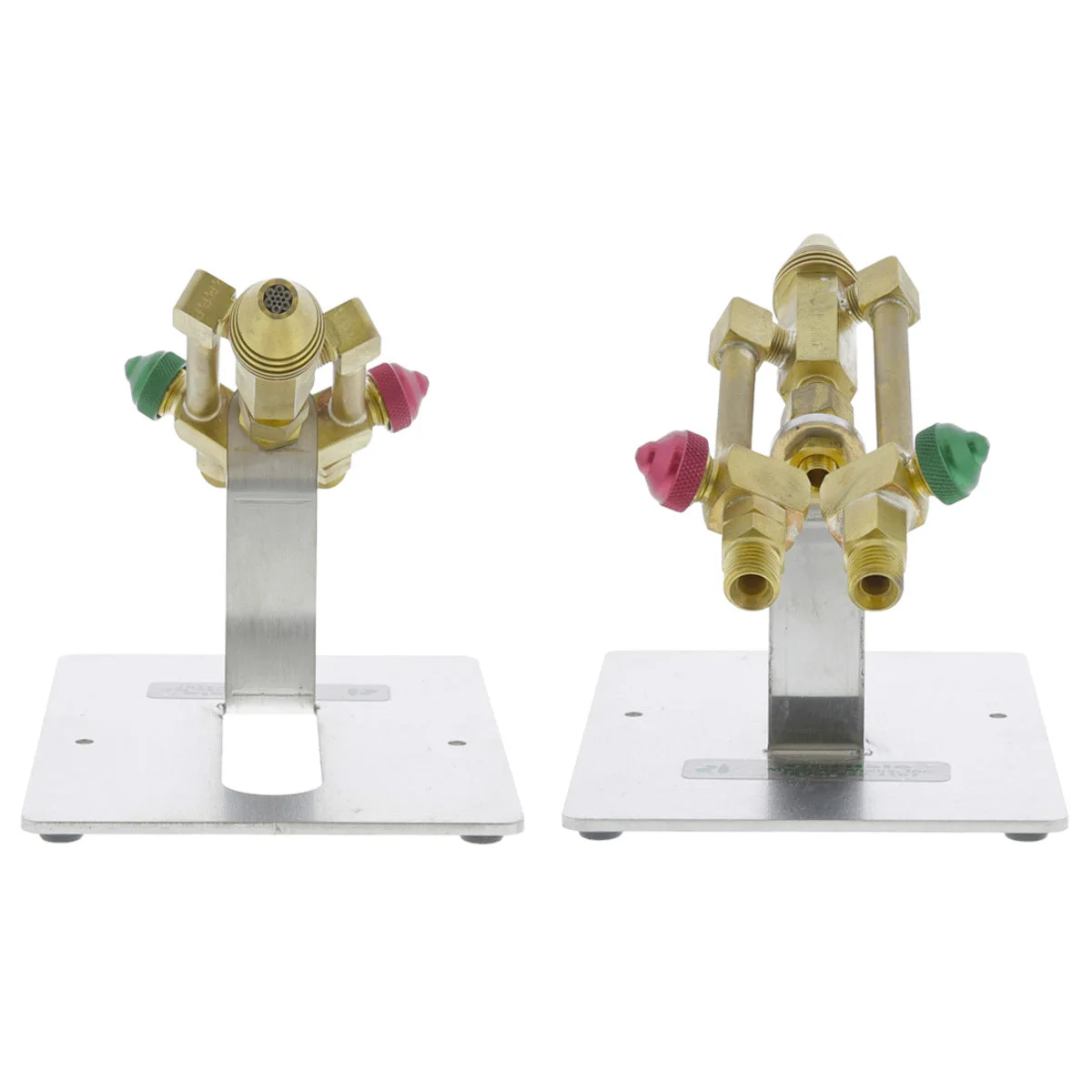
Specs
- Mix type
- Surface mix
- Mount
- Bench
- Oxygen
- 7 LPM
- Fuel
- Propane, Natural gas
- Skill level
- Beginner
- Glass
- Soft, Boro
- Best for
- Beads, Small boro, Forgiving first torch
- Price
- Mid ($$) $$
- Jets
- 7
- Stages
- 1
Overview
The Carlisle Mini CC is the small, forgiving member of Carlisle’s long-running CC family — and one of the torches that has introduced more people to working glass than almost any other. It’s a single-stage, 7-jet surface-mix bench burner (seven stainless tubes in a brass body) with a flame that’s hot but bushy and gentle, which is exactly why it turns up so often in intro classes and on starter benches.
The flame
The Mini CC runs a surface-mix flame: fuel and oxygen meet at the face of the torch rather than premixing inside it. The practical payoff for a beginner is forgiveness — the flame is bushy and gentle rather than needle-sharp, so uneven rotation and early mistakes don’t get punished the way they do on a tightly focused flame. It’s hot enough to do real work, but easy to read and easy to live with. For the broader picture, see surface mix vs premix torches.
Who it’s for
This is a torch for beginners and improving soft-glass workers — beads, small borosilicate, and anyone who wants a tool that won’t fight them while they learn. It’s hard to outgrow quickly, and its gentle character makes it a safer on-ramp than a sharply focused detail flame. Weighing it against the other classic first torch? Read Nortel Minor vs Carlisle Mini CC and the broader best beginner glass torch guide.
Glass, fuel & oxygen
The Mini CC handles soft (soda-lime) glass and small boro; it isn’t built for large boro tubes or marbles, which need more heat than a single-stage torch delivers. It burns propane or natural gas with oxygen, and its appetite is modest: Carlisle lists consumption around 1.5 LPM propane and 7 LPM oxygen, with recommended pressures of about 2 psi gas and 5 psi oxygen. That’s low enough that many lampworkers run it from an oxygen concentrator, but confirm your supply against your actual work first — see how many LPM does my torch need and oxygen concentrator vs tanks.
Where it sits in the Carlisle lineup
The Mini CC is the gentle entry point to Carlisle’s CC family. Above it sit the combination CC, CC+, and CC++ (premix center fire plus a surface-mix outer), and the larger surface-mix Wildcat for heavier boro and production. Carlisle also offers a Mini CC Hand Torch version of this same 7-tube surface-mix head if you want the format off the bench. The throughline across the family is forgiveness at the small end and proven production muscle at the large end.
Before you buy
Budget for the whole system, not just the torch: oxygen (a concentrator or tanks), the correct propane or natural-gas regulator, flashback arrestors on both lines, didymium eyewear, and ventilation. New to plumbing a torch? Start with the fittings, hoses & connectors guide and the glass torch safety setup guide.
Editor’s note: spec details (jet count, consumption, and recommended pressures) reflect Carlisle’s own materials. Carlisle doesn’t publish a current MSRP, and the pressure figures are line pressures, not flow rates — so confirm pricing and match your oxygen supply to your work with Carlisle before purchasing.
Best for: Beginners and improving soft-glass workers: beads, small borosilicate, and anyone who wants a gentle, forgiving first torch that doesn't punish uneven rotation.
Not for: Large boro tubes, marbles, sculpture, or production heat — step up to a Wildcat or one of the larger combination Carlisles for that.
Pros
- + Surface-mix flame that's hot but bushy and gentle — forgiving of beginner mistakes
- + Classic, long-proven beginner torch from a decades-old maker
- + Modest oxygen appetite: runs on roughly 7 LPM oxygen
- + Handles soft glass and small boro
- + Ball-joint stand sets the head at 45 degrees
Cons
- − Single-stage — not built for large boro or production heat
- − Mid price band; more than a bare-bones premix starter
- − MSRP isn't published — confirm current pricing with Carlisle
Flame notes
7-jet surface-mix burner (seven stainless tubes, brass body). Consumption ~1.5 LPM propane and 7 LPM oxygen; recommended 2 psi gas / 5 psi oxygen. Hot but bushy, gentle flame; forgiving for beginners (uneven rotation less punishing). Stand sets the head at 45 degrees on a ball joint.
Maker
Carlisle Machine Works
USA
Focus: Soft, Boro, Beads
CC and Mini CC surface-mix torches; Mini CC beloved as a forgiving beginner/soft-glass torch.
Related reading
FAQ
- Is the Carlisle Mini CC good for beginners?
- Yes — it's one of the most-recommended first torches in the craft. Its flame is hot but bushy and gentle, so uneven rotation and early mistakes are punished far less than on a tightly focused flame. That forgiveness is exactly what you want while you build basic torch habits.
- How much oxygen does the Mini CC need?
- Carlisle lists consumption around 1.5 LPM propane and 7 LPM oxygen, with recommended pressures of about 2 psi gas and 5 psi oxygen. Those are Carlisle's published figures; confirm the current numbers and your oxygen supply against the work you do before buying.
- Mini CC or Nortel Minor for a first torch?
- Both are classic beginner bench torches. The Minor is premix; the Mini CC is surface-mix with a bushier, more forgiving flame. See our Nortel Minor vs Carlisle Mini CC comparison to decide which suits you.
- Soft glass, boro, or both?
- Both: the Mini CC handles soft (soda-lime) glass and small borosilicate. For larger boro tubes or marbles you'd want more heat than this single-stage torch delivers.
- Is there a hand-torch version?
- Yes — Carlisle makes a Mini CC Hand Torch, a 7-tube surface-mix hand-held version of the same burner, offered in High-Oxygen and Pinpoint variants.