GTT Lynx: the 7-jet Triple Mix detail torch
GTT Lynx · Bench torch · Surface mix
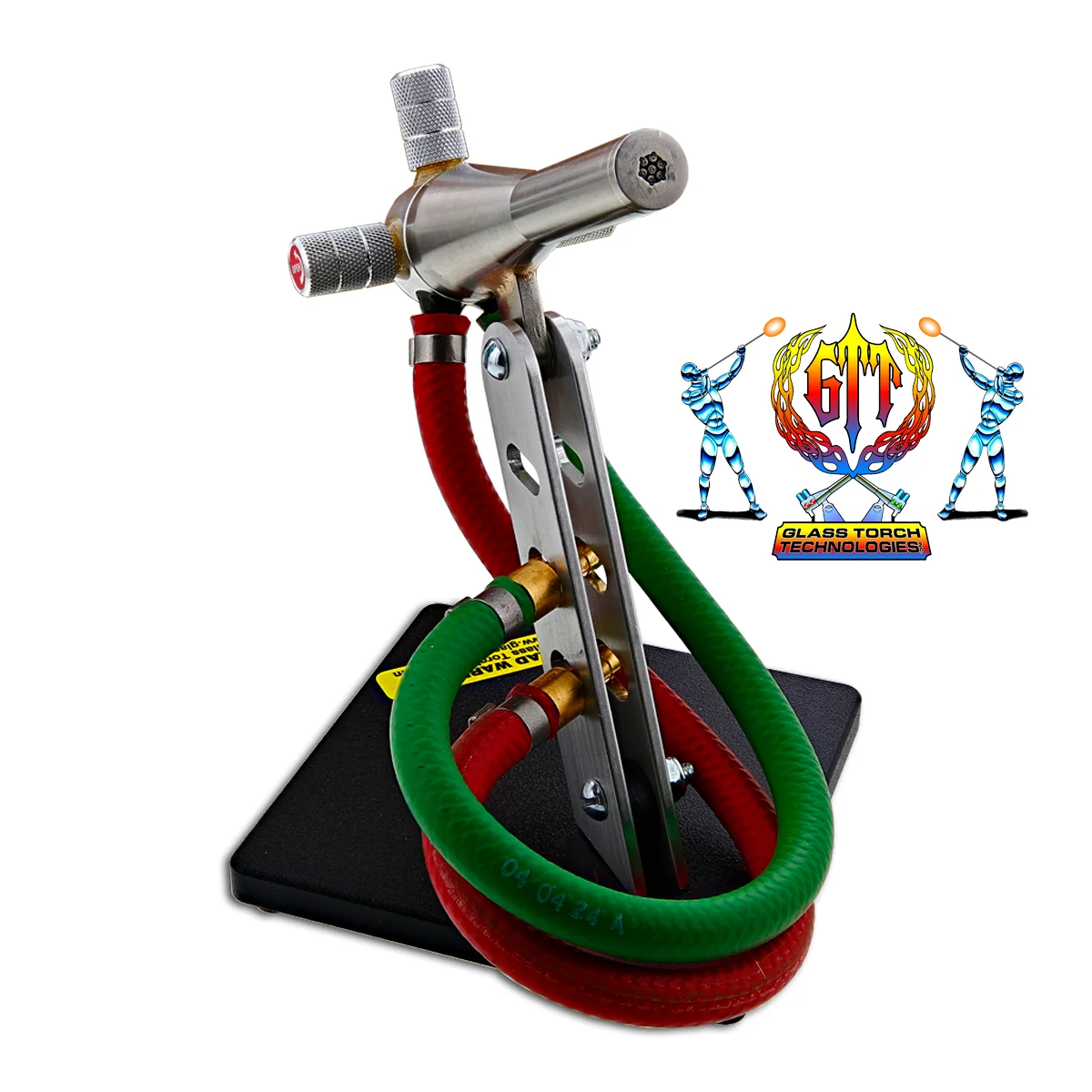
The GTT Lynx is a single-stage, 7-jet Triple Mix (surface-mix) torch built for a precise, controllable pinpoint flame — and the same Lynx center fire is the building block inside GTT's larger multi-stage torches.
Watch

Specs
- Mix type
- Surface mix
- Mount
- Bench
- Oxygen
- —
- Fuel
- Propane, Natural gas
- Skill level
- Intermediate, Advanced
- Glass
- Soft, Boro
- Best for
- Detail, Beads, Small boro
- Price
- Mid ($$) $$
- Jets
- 7
- Stages
- 1
Overview
The GTT Lynx is Glass Torch Technologies’ compact, single-stage detail torch — and quietly one of the most important torches the company makes. Its 7-jet, patented Triple Mix surface-mix head produces a tight, controllable pinpoint flame that’s a long-time favorite for detail and color work, and the very same Lynx “center fire” is the core GTT builds its larger multi-stage torches around. Learn the Lynx and you’ve learned the heart of the GTT lineup.
What the Triple Mix flame gives you
Triple Mix is GTT’s surface-mix technology: fuel and oxygen meet at the face of the torch rather than premixing inside it. The practical payoff is a clean, quiet, forgiving flame that’s gentle on colors and easy to dial from a soft setting down to a sharp point. The Lynx’s seven jets concentrate that into a precise detail flame rather than a wide soaking flame. For the full explanation, see GTT Triple Mix technology and surface mix vs premix torches.
Who the Lynx is for
The Lynx is aimed at detail and color work, beadmaking, and small borosilicate — anyone who wants a precise, controllable flame more than raw heat. It’s typically described as an intermediate-to-advanced detail torch rather than a first burner; new lampworkers usually start cheaper and come to the Lynx when their work gets fine. If you want a wider, bushier general-purpose flame, compare the Lynx vs the Bobcat; if you want more flame for bigger work, see the Cheetah vs Lynx.
Glass, fuel, and oxygen
The Lynx runs soft (soda-lime) glass and small boro comfortably; it isn’t built for large boro tubes or marbles, which need more heat than a single-stage torch delivers. It burns propane or natural gas with oxygen. Its oxygen appetite is modest for a Triple Mix torch, and many lampworkers run it from an oxygen concentrator — but GTT doesn’t publish exact LPM figures, so confirm your oxygen supply against your work before you buy. See how many LPM does my torch need and oxygen concentrator vs tanks.
GTT’s own Lynx instructions give a concrete starting point for regulator pressure: set the propane regulator to 5–8 PSI and the oxygen regulator to 15–25 PSI. Those are line pressures, not flow rates — they don’t tell you how many LPM the torch draws, which is why an oxygen concentrator still has to be matched to the work you actually do. The full setup and lighting sequence is in the Lynx instructions (PDF).
Dialing the flame: the red, green, and blue valves
The Lynx has three valves, and learning what each one does is most of the skill of running it. GTT’s instruction sheet lays it out clearly:
- Red valve — fuel. Light the torch on the red valve alone and get a roughly 7-inch yellow flame going.
- Green valve — main (outer) oxygen. This is the most important oxygen control: it keeps the torch cool and stops the flame burning back into the jet orifices. If the jets glow orange, or you see orange streaks in the blue flame, open the green valve a little more. Red and green together cover most beadwork.
- Blue valve — secondary (inner) oxygen. This focuses and sharpens the flame and gives it thrust; back it off (or close it) for a soft, brushy flame. Excessive hissing or crackling means the blue valve is open too far.
A few rules of thumb straight from GTT: for a soft, brushy flame use only red and green; for a small, very focused flame use only red and blue with the green off; for the hottest flame and the widest range of characteristics, use all three. Don’t run a soft, low, or short flame for long — it overheats the burner. To shut down, close the blue valve, then the green, then the red.
Bench or hand torch
The Lynx is offered as a bench burner and as a hand-torch configuration, so you can pick the format that fits how you work.
Where it sits in the GTT lineup
The Lynx isn’t only an entry into Triple Mix — it’s the center fire GTT builds its multi-stage torches around. Step up to a Phantom, Mirage, or the three-stage models and you’re essentially wrapping more fires around a Lynx-style core, so the flame behavior you learn here carries upward.
Before you buy
Budget for the whole system, not just the torch: oxygen (a concentrator or tanks), the correct propane or natural-gas regulator, flashback arrestors on both lines, didymium eyewear, and ventilation. New to plumbing a torch? Start with the fittings, hoses & connectors guide and the glass torch safety setup guide.
Editor’s note: spec details reflect GTT’s own materials, including the Lynx instruction sheet (the regulator pressures above). GTT doesn’t publish the Lynx’s exact oxygen flow (LPM) or current pricing, so confirm those specifics with GTT before purchasing.
Best for: Detail and color work, beadmaking, and small boro — anyone who wants a precise, controllable pinpoint flame more than raw heat.
Not for: Large boro tubes and marbles, big sculpture, or production work — step up to a Cheetah or a multi-stage GTT for that.
Pros
- + Patented Triple Mix surface-mix flame: clean, quiet, and forgiving of color
- + Tight 7-jet pinpoint flame ideal for fine detail
- + Handles soft glass and small borosilicate
- + Modest oxygen appetite for a Triple Mix torch
- + Same Lynx center fire powers GTT's multi-stage torches, so your skills transfer
Cons
- − Single-stage — not built for large boro or production heat
- − Mid price band; more than an entry premix starter
- − Exact oxygen/LPM figures aren't published — confirm with GTT
Flame notes
7-jet pinpoint detail flame; patented Triple Mix surface mix.
Manuals & instructions
Manufacturer documentation, hosted here for reference.
Maker
Glass Torch Technologies
USA · Founded 1999
Focus: Boro, Production, Pipe, Soft
Patented Triple Mix and newer 4-Way Mix surface-mix technology with compressed-air injection. Category leader for boro/production; dated web presence (the digital opening).
Related reading
- GTT Triple Mix Technology: How Surface-Mix and the Lynx Center Fire Work
- GTT Compressed Air & 4-Way Mix: Tuning Flame Temperature Without Changing the Flame
- GTT Lynx vs Bobcat: Which Surface-Mix Torch Should You Buy?
- GTT Cheetah vs Lynx: Which Triple Mix Detail Torch Wins?
- Surface Mix vs Premix Torches: Which Is Right for You?
- How to Choose a Glass Torch: The Complete Buyer's Guide
FAQ
- Is the GTT Lynx good for beginners?
- It's usually pitched at intermediate-to-advanced detail work rather than a first torch. The surface-mix flame is forgiving, but most beginners start cheaper — a Nortel Minor, Carlisle Mini CC, or GTT's own Bobcat — and move to the Lynx once their work gets fine.
- Can the Lynx run on a single oxygen concentrator?
- Its oxygen appetite is modest for a Triple Mix torch, and many lampworkers run it on a single concentrator. GTT doesn't publish exact LPM, though, so confirm your concentrator's output against the work you do before committing.
- What's the difference between the Lynx and the Bobcat?
- The Lynx is a 7-jet pinpoint Triple Mix detail flame; the Bobcat is GTT's standard surface-mix torch with a wider, bushier flame. Fine detail and color lean Lynx; general soft-glass work and a softer flame lean Bobcat.
- Does the Lynx come as a hand torch?
- Yes — GTT offers a Lynx hand-torch configuration alongside the bench version, so you can pick the format that fits how you work.
- Soft glass, boro, or both?
- Both: the Lynx handles soft (soda-lime) glass and small borosilicate. For larger boro tubes or marbles you'd want more heat than a single-stage Lynx delivers.