GTT Samurai: a compact three-stage, 72-jet Triple Mix production torch
GTT Samurai · Bench torch · Surface mix
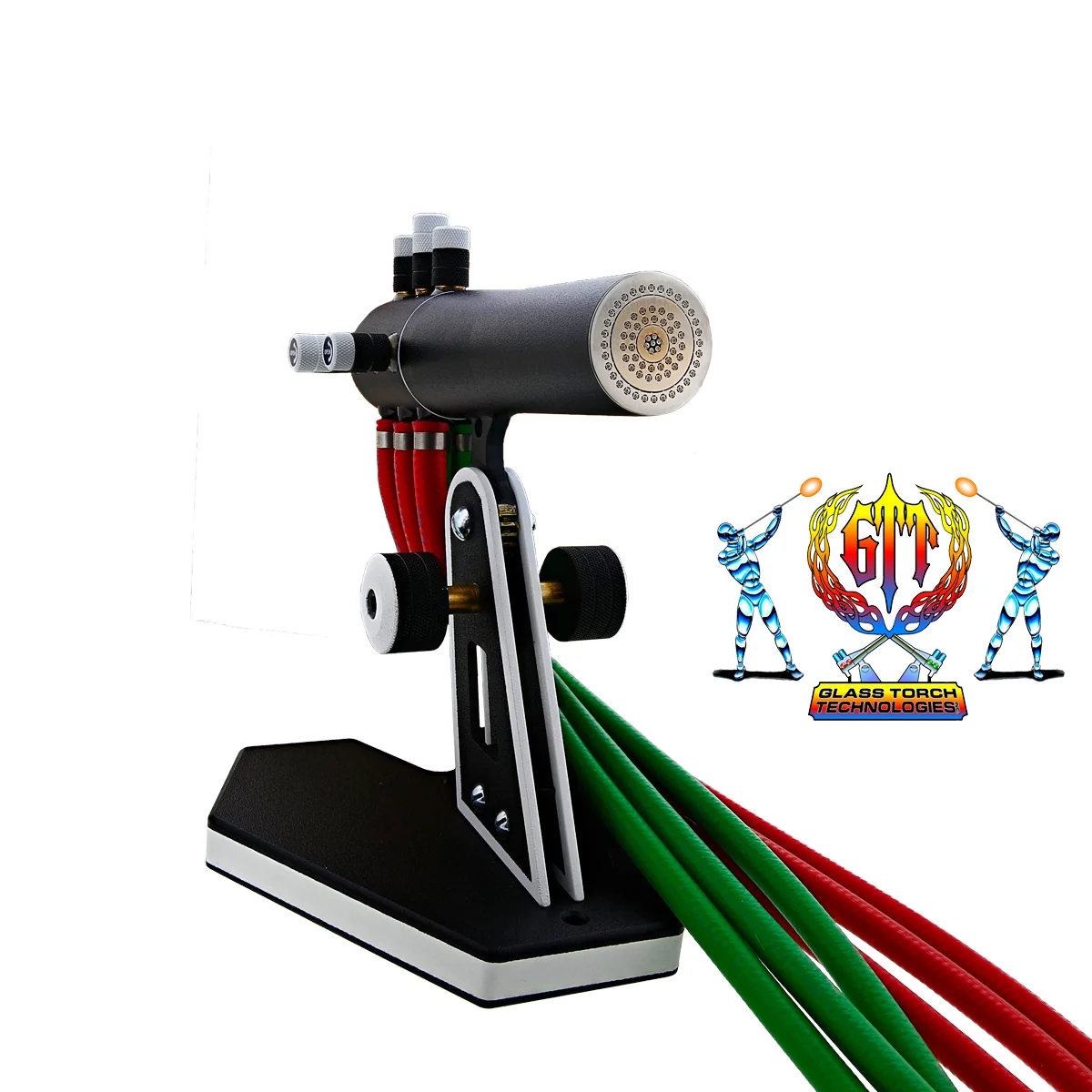
The GTT Samurai is a three-stage, 72-jet Triple Mix (surface-mix) production torch — a 7-jet Lynx center, a 33-jet Mirage middle, and a 32-jet outer — sized between the Kobuki and Delta Mag with a compact body, and a compressed-air option.
Specs
- Mix type
- Surface mix
- Mount
- Bench
- Oxygen
- —
- Fuel
- Propane, Natural gas
- Skill level
- Advanced
- Glass
- Soft, Boro
- Best for
- Production, Large boro, Fast melt-ins
- Price
- Pro ($$$$) $$$$
- Jets
- 72
- Stages
- 3
Overview
The GTT Samurai is one of Glass Torch Technologies’ three-stage production burners — a 72-jet Triple Mix torch built around a 7-jet Lynx center, a 33-jet Mirage middle, and a 32-jet outer fire. Like its close sibling the Ninja, it’s sized between the Kobuki and Delta Mag with a compact body that’s easy to work behind, and it’s aimed at fast melt-ins and production. The Samurai simply weights more of its 72 jets into the middle stage. A compressed-air path is available.
What the three-stage Triple Mix flame gives you
Triple Mix is GTT’s surface-mix technology: fuel and oxygen meet at the face of the torch, keeping the mixing chamber cool and giving a clean, penetrating flame that drives heat into the core of thick glass — what large boro and fast melt-ins demand. Three stages let you keep a fine center flame available while having a big soaking flame on tap. For the underlying tech see GTT Triple Mix technology and surface mix vs premix torches; for why penetration matters here, read soaking vs penetrating flame.
The compressed-air option
The Samurai can be ordered with GTT’s compressed-air path, which injects air into the fuel system so you can lower flame temperature while keeping the same flame chemistry and flame type. It’s a useful lever for tuning the flame without otherwise changing how the torch behaves. The full explanation is in GTT compressed air & 4-Way Mix.
Who the Samurai is for
The Samurai suits advanced makers and production studios who want big-torch heat and fast melt-ins from a compact body they can work close behind. It isn’t a soft-glass bead torch and it isn’t a beginner’s first burner.
Glass, fuel, and oxygen
The Samurai burns propane or natural gas with oxygen and runs both boro and soft glass, with its center of gravity firmly in large boro. As a three-stage production torch its oxygen demand is high — realistically tanked oxygen or multiple concentrators. GTT doesn’t publish the Samurai’s exact LPM, so size your oxygen to your work and confirm with GTT. Start with how many LPM does my torch need.
Where it sits in the GTT lineup
The Samurai slots between the Kobuki and Delta Mag among GTT’s three-stage production torches, as the Mirage-middle counterpart to the Phantom-middle Ninja. Both are built on the same Lynx center, so the flame behavior is familiar across the line; the choice between them comes down to how the jets are distributed across the stages.
Before you buy
Budget for the whole system, not just the torch: an oxygen supply sized to a three-stage production torch, the correct propane or natural-gas regulator (plus an air source if you take the compressed-air option), flashback arrestors on both lines, didymium eyewear, and serious ventilation. New to plumbing a torch this size? Start with the fittings, hoses & connectors guide and the glass torch safety setup guide.
Editor’s note: spec details reflect GTT’s own materials. GTT doesn’t publish the Samurai’s exact oxygen flow (LPM) or current pricing, so confirm those specifics with GTT before purchasing.
Best for: Advanced makers and production studios wanting big-torch heat and fast melt-ins from a compact body, with more of the jets weighted into the middle stage.
Not for: Beginners, detail-only work, or anyone on a small single concentrator — this is a thirsty, production-class burner.
Pros
- + Three-stage Triple Mix: 7-jet Lynx center, 33-jet Mirage middle, 32-jet outer (72 total)
- + Sized between the Kobuki and Delta Mag for a lot of heat
- + Compact body that's easy to work behind
- + Built for fast melt-ins and production
- + Optional compressed-air path to tune flame temperature without changing flame type
Cons
- − High oxygen appetite — plan a tank or multi-concentrator supply
- − Pro price band; a serious production investment
- − Built for large boro, not soft-glass beads or fine detail alone
- − Exact oxygen/LPM figures and pricing aren't published — confirm with GTT
Flame notes
3-stage Triple Mix: 7-jet Lynx center + 33-jet Mirage middle + 32-jet outer = 72 jets total. Sized between the Kobuki and Delta Mag; compact body. Compressed-air option available. (GTT URL slug is 'samauri'.)
Maker
Glass Torch Technologies
USA · Founded 1999
Focus: Boro, Production, Pipe, Soft
Patented Triple Mix and newer 4-Way Mix surface-mix technology with compressed-air injection. Category leader for boro/production; dated web presence (the digital opening).
Related reading
- GTT Triple Mix Technology: How Surface-Mix and the Lynx Center Fire Work
- GTT Compressed Air & 4-Way Mix: Tuning Flame Temperature Without Changing the Flame
- Soaking vs Penetrating Flame: How Torch Heat Actually Works
- Surface Mix vs Premix Torches: Which Is Right for You?
- How Many LPM Does My Torch Need? Sizing Oxygen for Your Glass Torch
FAQ
- What is the GTT Samurai built for?
- Large boro and fast production melt-ins. It's a three-stage, 72-jet Triple Mix torch — a 7-jet Lynx center, a 33-jet Mirage middle, and a 32-jet outer — sized between the Kobuki and Delta Mag, with a compact body that's easy to work behind.
- How is the Samurai different from the Ninja?
- Both are three-stage, 72-jet Triple Mix torches sized between the Kobuki and Delta Mag. The Samurai uses a 33-jet Mirage middle with a 32-jet outer; the Ninja uses a 15-jet Phantom middle with a 50-jet outer. The difference is how the jets are distributed across the stages.
- Does the Samurai have a compressed-air option?
- Yes. GTT offers a compressed-air path, which injects air into the fuel system so you can lower flame temperature while keeping the same flame chemistry and type. See our guide to GTT's compressed air and 4-Way Mix.
- Can the Samurai run on an oxygen concentrator?
- It's a three-stage production torch, so its oxygen demand is well beyond a single small concentrator. GTT doesn't publish exact LPM, so plan around tanked oxygen or multiple concentrators and confirm with GTT.
- Is the Samurai a good first torch?
- No — it's an advanced, production-class burner. Beginners should start with a single-stage GTT like the Bobcat or Cheetah and a much smaller oxygen supply.