Carlisle Wildcat: the 19-fuel-port surface-mix production burner
Carlisle Wildcat · Bench torch · Surface mix
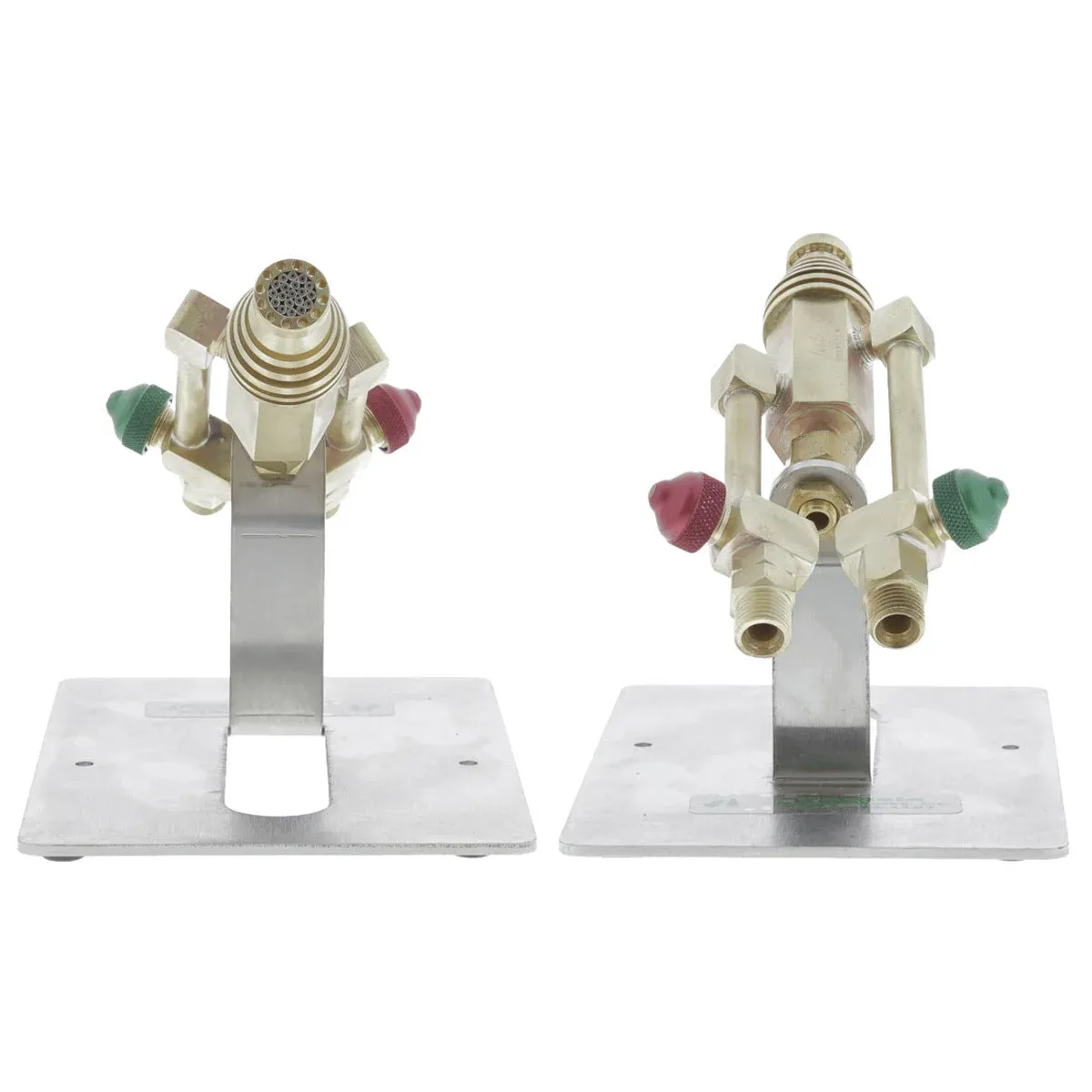
The Carlisle Wildcat is a surface-mix bench burner built around a stainless tube matrix of 19 fuel ports surrounded by oxygen porting, for heavier borosilicate and production work, with a 'Vortex' cooling system and classic Carlisle power.
Specs
- Mix type
- Surface mix
- Mount
- Bench
- Oxygen (estimate)
- ~15 LPM
- Fuel
- Propane, Natural gas
- Skill level
- Advanced
- Glass
- Boro
- Best for
- Large boro, Production
- Price
- ~$612 (reference)
- Jets
- 19
Manufacturer page
Manufacturer page
Manufacturer page
Treat the oxygen figure as a rough sizing estimate, not a specification. Depending on the model it may be manufacturer full-flame consumption, a converted flow figure, or a documented estimate, and delivered pressure and purity matter as much as flow. What actually drives a torch choice is the glass, the work, and the flame, so size your oxygen supply after you pick the torch. Prices may be manufacturer list prices or observed dealer references. Use the evidence label and sources below, then confirm the exact configuration before buying.
Overview
The Carlisle Wildcat is the larger Carlisle bench torch for makers who want classic Carlisle power with more heat than the CC delivers. It’s a surface-mix burner built around a stainless tube matrix of 19 fuel ports surrounded by oxygen porting in a brass body, aimed squarely at heavier borosilicate and production work. An earlier version of this page published a 31-port total by adding the 19 fuel ports to the 12 ports cut into the front casing. Carlisle describes those 12 as part of the Vortex cooling system, which draws air through the casing using oxygen flow, while some resellers call them oxygen ports. Because the sources disagree, we publish the documented 19 fuel ports and describe the rest separately rather than summing them.
The flame
The Wildcat is a pure surface-mix torch: fuel and oxygen meet at the face rather than premixing inside, which makes it calmer and less prone to backfire than a combination design like the CC. The payoff is a strong, penetrating production flame with the heat base to move thick glass. Carlisle’s 12 front oxygen ports also drive what the company calls a ‘Vortex’ cooling system, helping the burner stay cool through long, hot sessions. For the broader picture, see surface mix vs premix torches.
Who it’s for
This is an advanced and production-tier torch. Carlisle rates it for solid boro to roughly 1.5 inches and solid soft glass to about 2 inches, well beyond detail work. If you’re building heavier functional pieces and want a torch that won’t run out of heat, the Wildcat answers the call. If you’re still learning, start on the gentler Mini CC instead.
Glass, fuel & oxygen
The Wildcat handles boro and heavier soft glass, and burns propane or natural gas with oxygen. It’s thirsty: Carlisle lists consumption around 3 LPM propane and 15 LPM oxygen, with recommended pressures of about 2 psi gas and 5 psi oxygen. At roughly 15 LPM oxygen it will outrun a small concentrator setup quickly, so plan your supply around it, see how many LPM does my torch need and oxygen concentrator vs tanks.
Where it sits in the Carlisle lineup
The Wildcat is Carlisle’s step up from the CC into heavier boro and production. Below it sit the combination CC, CC+, and CC++ (premix center plus surface-mix outer) and the beginner Mini CC. Where the CC family centers on goblets, stemware, and detail, the Wildcat is the dedicated higher-output surface-mix workhorse.
Before you buy
Budget for the whole system, not just the torch, and at this output, the oxygen supply is the real constraint. Plan for the ~15 LPM oxygen the Wildcat wants, the correct propane or natural-gas regulator, flashback protection matched to your torch and gas supply, didymium or boro-rated eyewear matched to your glass, and ventilation. New to plumbing a torch? Start with the fittings, hoses & connectors guide and the glass torch safety setup guide.
Editor’s note: spec details (port count, consumption, and recommended pressures) reflect Carlisle’s own materials. The pressure figures are line pressures, not flow rates, so match your oxygen supply to your work, and confirm the current price with Carlisle before purchasing.
Fit and tradeoffs
Best for: Advanced makers working larger borosilicate and production pieces: solid boro to roughly 1.5 inches and solid soft glass to about 2 inches.
Not for: Beginners, fine detail-only work, or anyone on a small oxygen supply, the Wildcat wants around 15 LPM oxygen. Step down to a Mini CC for learning.
Pros
- + Pure surface-mix flame, calmer and less backfire-prone than a combination torch
- + Stainless tube matrix of 19 fuel ports surrounded by oxygen porting, for a strong production flame
- + 12 front ports drive a 'Vortex' cooling system
- + Handles solid boro to ~1.5in and solid soft glass to ~2in
- + Classic Carlisle power and durability
Cons
- − Thirsty for oxygen: around 15 LPM, plan your supply accordingly
- − Mid price band; more heat than the CC for heavier boro and production
- − Not a beginner or detail-first torch
Flame notes
Single-stage surface-mix bench burner. Carlisle documents a stainless tube matrix of 19 fuel ports surrounded by oxygen porting; jets records the 19 fuel ports. A separate set of 12 ports is cut into the front brass casing: Carlisle presents these as part of the Vortex cooling system, which uses oxygen flow to draw air through the casing, while some resellers describe the same 12 as oxygen ports. Sources disagree, so we do not add them to the fuel-port count. Carlisle lists standard use at 3 LPM propane and 15 LPM oxygen, with natural gas, propane, or hydrogen as fuel options.
Maker
Carlisle Machine Works
USA · Founded 1918
Focus: Soft, Boro, Beads
Family-owned Millville, New Jersey manufacturer. Its current glassworking line includes combination, surface-mix, bench, and hand torches. Carlisle says the CC was developed with Corning in 1939.
Related reading
Compared with
Head-to-head guides that put the Wildcat against other torches.
FAQ
- How much oxygen does the Carlisle Wildcat need?
- Carlisle lists consumption around 3 LPM propane and 15 LPM oxygen, with recommended pressures of about 2 psi gas and 5 psi oxygen. At roughly 15 LPM oxygen, the Wildcat will outrun a small concentrator quickly, plan your oxygen supply around it. Confirm the current figures with Carlisle.
- What size glass can the Wildcat handle?
- Carlisle rates it for solid boro to about 1.5 inches and solid soft glass to about 2 inches. That puts it firmly in larger-work and production territory rather than detail work.
- Is the Wildcat surface-mix or a combination torch?
- It's a pure surface-mix burner, a stainless tube matrix of 19 fuel ports surrounded by oxygen porting. A separate 12 ports are cut into the front brass casing: Carlisle presents these as part of the Vortex cooling system, while some resellers describe them as oxygen ports, so we do not publish a combined total. Unlike the combination CC, there's no premix center fire, which makes it calmer and less prone to backfire.
- What is the 'Vortex' cooling system?
- Carlisle describes the 12 front (oxygen) ports as driving a 'Vortex' cooling system that helps keep the burner cool in heavy use. It's part of why the Wildcat can run as a production torch.
- Is the Wildcat good for beginners?
- No, it's an advanced, high-output production burner with a real oxygen appetite. Beginners are far better served by Carlisle's surface-mix Mini CC.