Herbert Arnold Big Arni: a 15-jet surface-mix bench burner for beads
Herbert Arnold Big Arni · Bench torch · Surface mix
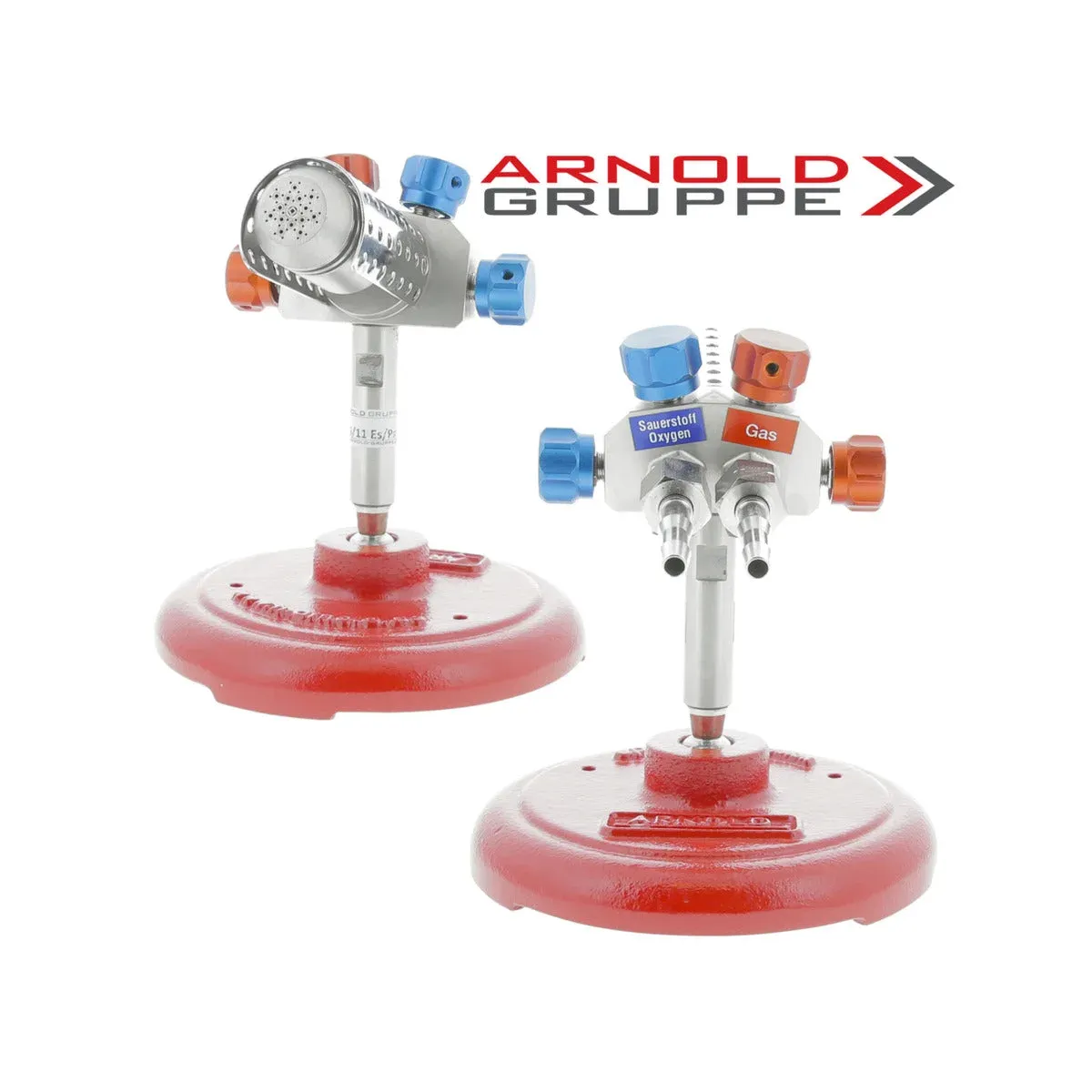
The Herbert Arnold Big Arni is a 15-jet, surface-mix bench burner aimed at beads and small handicrafts, a German precision torch with a solid, homogeneous flame, two-zone adjustment, and the backfire safety that surface mix provides.
Specs
- Mix type
- Surface mix
- Mount
- Bench
- Oxygen (estimate)
- n/a
- Fuel
- Propane
- Skill level
- Beginner, Intermediate
- Glass
- Soft, Boro
- Best for
- Beads, Small handicrafts, Soft glass
- Price
- ~$1,095 (reference)
- Jets
- 15
- Stages
- 2
Treat the oxygen figure as a rough sizing estimate, not a specification. Depending on the model it may be manufacturer full-flame consumption, a converted flow figure, or a documented estimate, and delivered pressure and purity matter as much as flow. What actually drives a torch choice is the glass, the work, and the flame, so size your oxygen supply after you pick the torch. Prices may be manufacturer list prices or observed dealer references. Use the evidence label and sources below, then confirm the exact configuration before buying.
Overview
The Herbert Arnold Big Arni is a 15-jet, single-stage surface-mix bench burner aimed squarely at beadmaking and small handicrafts. It runs propane and oxygen, produces a solid, homogeneous flame with two-zone adjustment, and, like other surface-mix burners, gives safety against backfire because fuel and oxygen meet at the face of the torch rather than inside it. It comes from Herbert Arnold, the long-established German glass-machinery maker known for precise, quiet burners.
What the surface-mix flame gives you
In a surface-mix torch the fuel and oxygen mix at the face rather than premixing inside the body, which keeps the mixing chamber cooler and is safer against backfire. On the Big Arni that translates to a solid, even flame that’s well suited to controlled bead and detail work. If you’re new to the distinction, surface mix vs premix torches explains the trade-offs, and Herbert Arnold concentric-ring burners covers the maker’s wider approach.
Who the Big Arni is for
The Big Arni is aimed at beads and small handicrafts in soft glass and small boro, at the beginner-to-intermediate level. It’s a well-built burner, but it’s a premium German tool rather than a budget starter, so weigh it against more affordable options if it’s your first torch, our best beginner glass torch and how to choose a glass torch guides can help.
Glass, fuel, and the hardware
The Big Arni works glass up to roughly 40mm diameter, it’s sized for beads and small pieces, not large tubing or heavy boro. It burns propane with oxygen. The burner head measures 28mm in diameter with an 11.7mm jet ring, weighs about 1.76 kg, and sits on a cast-iron base with a ball joint for stable, adjustable positioning. Herbert Arnold doesn’t publish the burner’s exact oxygen flow (LPM), so match your oxygen supply to your work before you buy, see how many LPM does my torch need.
Before you buy
Budget for the whole system, not just the torch: oxygen (tanks or a concentrator), the correct propane regulator, flashback protection matched to your torch and gas supply, didymium or boro-rated eyewear matched to your glass, and ventilation. As a German burner, sourcing, support, and parts can be less convenient outside Europe. New to plumbing a torch? Start with the fittings, hoses & connectors guide and the glass torch safety setup guide.
Editor’s note: spec details (the jet count, head and jet-ring dimensions, weight, base, and the ~40mm working size) reflect Herbert Arnold’s own materials and dealer listings. Herbert Arnold doesn’t publish the Big Arni’s exact oxygen flow (LPM) or current pricing, so confirm those specifics with Herbert Arnold before purchasing.
Fit and tradeoffs
Best for: Beadmaking and small handicrafts in soft glass and small boro, for makers who want a precise, well-built surface-mix bench burner with a calm, even flame.
Not for: Large tubing, heavy borosilicate, or production work, its flame is sized for glass up to roughly 40mm diameter.
Pros
- + Surface-mix design gives safety against backfire
- + Solid, homogeneous flame with two-zone adjustment
- + 15-jet professional burner from a premium German maker
- + Cast-iron base with a ball joint for stable, adjustable positioning
Cons
- − Sized for glass up to about 40mm, not a large-boro or production torch
- − Single-stage, two-zone burner rather than a multi-stage boro setup
- − Exact oxygen flow (LPM) isn't published, confirm with Herbert Arnold
- − Sourcing, support, and parts can be less convenient outside Europe
Flame notes
Surface-mix bench burner (propane + oxygen) for glass up to ~40mm diameter; aimed at beads and small handicrafts. 15-jet professional torch with a solid, homogeneous flame and 2-zone adjustment; head diameter 28mm, jet-ring 11.7mm, ~1.76 kg, cast-iron base with ball joint. Surface mix gives safety against backfire.
Maker
Herbert Arnold
Germany · Founded 1950
Focus: Scientific, Industrial, Boro, Soft
German manufacturer of burners, glassworking lathes, and production systems. Official burner materials include surface-mix hand and bench burners suitable for quartz.
Related reading
Compared with
Head-to-head guides that put the Big Arni against other torches.
FAQ
- What size glass is the Big Arni made for?
- Herbert Arnold aims it at glass up to roughly 40mm diameter, for beads and small handicrafts. For larger tubing or heavier boro you'd want a bigger burner such as the Zenit, which Arnold offers in larger head sizes; the concentric-ring burners guide linked below covers the range.
- What does 'two-zone adjustment' mean here?
- The Big Arni is described as a 15-jet burner with two-zone adjustment, which lets you shape the flame across the head. Herbert Arnold doesn't publish a full valve-by-valve walkthrough, so ask the maker for the exact control layout before you order.
- Is the Big Arni a good first torch?
- It's pitched at beginner-to-intermediate beadwork and is well built, but it's a premium German burner rather than a budget starter. Many beginners start cheaper; if you're shopping for a first torch, our best beginner glass torch guide (linked below) compares the usual starting points.