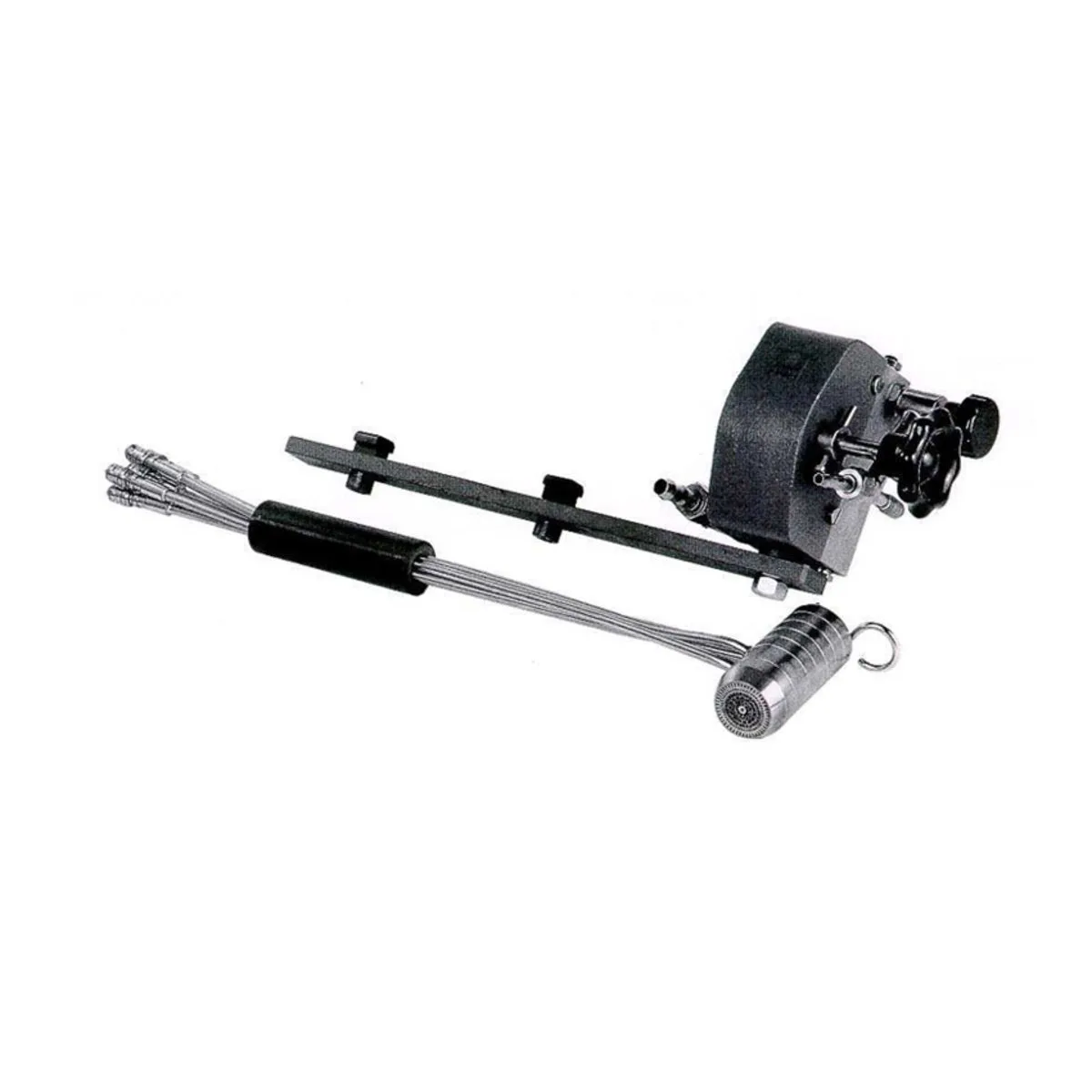
Herbert Arnold Zenit Hand Torch
Surface mix
$3,695*
US reference price
* Estimate: our reference US figure, not a list price from the maker.
Hand configuration shown.
Overview
Best for: Hand torch, Boro, Assembly
- Mount
- Hand
- Fuel versions
- Propane, Natural gas, Hydrogen
- Oxygen (estimate)
- ~58 LPM
Arnold builds separate fuel versions. Oxygen figures describe the catalog configuration; confirm your version with Arnold.
Specs
The Herbert Arnold Zenit Hand Torch puts a 40 mm surface-mix Zenit head on the end of 1.6 m hoses, with its valves and twist grip in a separate control unit, for reworking borosilicate glass. Arnold builds it for propane, natural gas or hydrogen, the last also for quartz.
Hand-held borosilicate work and assembly for makers who want the quiet, controllable Zenit-style surface-mix flame away from the bench.
- Jets
- Not confirmed
- Stages
- 1
- Mount
- Hand
- Mix
- Surface mix
Specs
- Mix type
- Surface mix
Manufacturer page · checked 2026-10-06 · source
- Mount
- Hand
- Oxygen (estimate)
- ~58 LPM
Manufacturer page · checked 2026-10-06 · source
- Fuel
- Propane, Natural gas, Hydrogen
Manufacturer page · checked 2026-09-28 · source
- Skill level
- Intermediate, Advanced
- Glass
- Boro, Quartz
Manufacturer page · checked 2026-10-06 · source
- Best for
- Hand torch, Boro, Assembly
- Price
- ~$3,695*Estimate
* Our reference US figure, not a list price from Herbert Arnold. Confirm the current price with Herbert Arnold.
- Stages
- 1
Figures come from Herbert Arnold's own pages and manuals where we have them; the oxygen figure is a rough estimate, not a specification. Confirm the current spec with Herbert Arnold before you buy.
How we source these figures
Treat the oxygen figure as a rough sizing estimate. Depending on the model it may be manufacturer full-flame consumption, a converted flow figure, or a documented estimate, and delivered pressure and purity matter as much as flow. What actually drives a torch choice is the glass, the work, and the flame, so size your oxygen supply after you pick the torch.
Prices may be manufacturer list prices or observed dealer references. Where a cell carries an evidence line it says where the figure came from, the date we checked it, and links the source where we hold one; a cell without one rests on the sources at the foot of the page. On a phone those lines show while this note is open. Confirm the exact configuration with Herbert Arnold before buying.
Spec provenance: 4 of 7 spec fields on this page cite the manufacturer's own pages or manuals.
Overview
The Herbert Arnold Zenit Hand Torch takes the Zenit bench burner’s 40 mm surface-mix head off its base and puts it in your hand. Arnold calls it a high-capacity hand torch (Hochleistungs-Handbrenner): the burner head is separated from the control unit, which mounts on a bracket at the burner support, and gas reaches the head through flexible DW-tested hoses 1,600 mm long. Herbert Arnold builds it for reworking borosilicate glass, and the hydrogen version for quartz too. It comes from the German maker behind the Zenit bench burner and its concentric-ring approach.
What the surface-mix flame gives you
Like the Zenit bench burner, this hand torch mixes fuel and oxygen at the face rather than inside the body, giving a clean, controllable flame with the Zenit family’s reputation for quiet, see quietest torches for shared studios. Control works the same way too: ball valves and one twist grip, but they sit on the control unit, not on the torch, so the part you hold is just the head and its handle, 1.2 kg. For the background on surface mix versus premix, see surface mix vs premix torches.
Who it’s for
The Zenit Hand Torch suits intermediate-to-advanced makers doing hand-held borosilicate work and assembly, where a fixed bench flame is awkward: reworking a large piece, joining, or reaching a seal on work already mounted. As a premium German hand torch it isn’t a budget first burner. If you’re choosing a format, see bench vs hand torch.
Versions, pressures and demand
Arnold builds three versions, all with the 40 mm head, a maximum flame of about 40 mm and a total length of 470 mm. Figures are from Arnold’s burner catalog (page 6) and its 02/2025 price list, read on 2026-10-06; prices are in euros, excluding VAT.
| Version | Fuel | Fuel / O2 pressure | Max fuel / O2 | Total weight | List price |
|---|---|---|---|---|---|
| 114/21 PS | Propane | 50 mbar / 2 bar | 0.5 / 3.5 m3/h | 6.1 kg | EUR 2,719 |
| 114/22 ES | Natural gas | 22 mbar / 1.5 bar | 2.2 / 4.4 m3/h | 5.2 kg | EUR 2,588 |
| 114/23 WS | Hydrogen | 500 mbar / 1.5 bar | 7.2 / 4.0 m3/h | 5.2 kg | EUR 2,585 |
In PSI the fuel side is low (50 mbar is about 0.7 psi, 22 mbar about 0.3 psi, 500 mbar about 7 psi) and the oxygen is 1.5 to 2 bar, about 22 to 29 psi (our conversions). The maximum oxygen draw on the propane version, 3.5 m3/h, is about 58 LPM, the estimate on this page; that is the ceiling at the largest flame, not what a working flame uses, but it puts the torch in tank or bulk territory rather than on a single concentrator. See how many LPM does my torch need and oxygen concentrator vs tanks.
Arnold’s catalog lists no compressed-air connection on the hand torch, unlike the propane and natural-gas Zenit bench burners; an earlier listing described an air version, so ask Arnold if air matters to you.
Before you buy
Budget for the whole system, not just the torch: oxygen (tanks or bulk), a regulator for your fuel, flashback protection matched to your torch and gas supply, eyewear selected for the glass and process, with quartz-specific protection when working quartz, and ventilation. Arnold recommends protection against reverse gas flow and flashback, and its gas connections are metric (9 mm gland on the fuel, 6 mm on the oxygen), so settle fittings with Herbert Arnold before you order. Its terms limit defect claims to 12 months. New to plumbing a torch? Start with the fittings, hoses & connectors guide and the glass torch safety setup guide.
Editor’s note: versions, pressures, consumption, weights and euro prices come from Herbert Arnold’s burner catalog and 02/2025 price list, as read on 2026-10-06. The quiet-flame reputation comes from earlier reads of Arnold’s materials and listings, not from the data sheet. Confirm the configuration and current price with Herbert Arnold before purchasing.
Fit and tradeoffs
Best for: Hand-held borosilicate work and assembly for makers who want the quiet, controllable Zenit-style surface-mix flame away from the bench.
Not for: Beginners wanting a cheap first torch, or heavy production work, this is a premium specialist hand torch.
Pros
- + Built on the same silent, surface-mix principle as the Zenit bench burners
- + Burner head separated from the control part for hand-held flexibility
- + Fed by flexible hoses for free movement at the work
- + 40 mm head with a flame up to about 40 mm; only 1.2 kg in the hand
- + Hydrogen version also rated for quartz
- + German precision build
Cons
- − Pro price band; far more than an entry hand torch
- − Hand torch, so limited output compared with a bench burner
- − Draws up to 3.5 to 4.4 cubic meters of oxygen an hour at full flame, a tank or bulk supply
- − Priced in euros from Germany; the price on this page is a US reference figure
Reader reviews
No reader reviews yet. If you have worked on this torch, yours would be the first, and it is read by the editor before it appears.
Write a review of the Herbert Arnold Zenit Hand Torch
Flame notes
High-capacity surface-mix hand torch (Hochleistungs-Handbrenner) with the 40 mm Zenit head separated from its control unit, which mounts on a bracket at the burner support; gas runs to the head through flexible DW-tested hoses 1,600 mm long. Ball valves and one twist grip; maximum flame about 40 mm; for borosilicate, and the hydrogen version also for quartz. Built as propane (114/21 PS), natural gas (114/22 ES) and hydrogen (114/23 WS) versions; Arnold's catalog lists no compressed-air connection for it. The propane version runs 50 mbar gas and 2 bar oxygen, draws at most 0.5 m3/h propane and 3.5 m3/h oxygen, is 470 mm long and weighs 6.1 kg in total, 1.2 kg at the head. Arnold's 02/2025 price list: EUR 2,719 (PS), 2,588 (ES), 2,585 (WS), excluding VAT.
Manuals & instructions
- Herbert Arnold Zenit leaflet (PDF, Arnold's site)
- Herbert Arnold burner catalog with technical data (PDF, Arnold's site)
Manufacturer documentation on the maker's own site, which holds the current revision.
Maker
Herbert Arnold
Germany · Founded 1950
Focus: Scientific, Industrial, Boro, Soft
German manufacturer of burners, glassworking lathes, and production systems. Official burner materials include surface-mix hand and bench burners suitable for quartz.
Related reading
Compared with
Head-to-head guides that put the Zenit Hand Torch against other torches.
FAQ
- How much does the Zenit Hand Torch cost?
- Arnold's 02/2025 price list gives EUR 2,719 for the propane version, EUR 2,588 for natural gas and EUR 2,585 for hydrogen, excluding VAT. The price on this page is a US reference figure, not Arnold's.
- Does it take compressed air?
- Arnold's catalog lists only fuel and oxygen for the hand torch, with no air connection, unlike the propane and natural-gas Zenit bench burners. An earlier listing described an air version, so ask Arnold if you need one.
- How does the Zenit Hand Torch relate to the Zenit bench burner?
- It's built on the same silent, surface-mix principle as the Zenit bench burners, brought into a hand-held form. The burner head is separated from the control part and fed by flexible hoses. For the bench burner and Arnold's concentric-ring approach, see the Herbert Arnold concentric-ring burners guide linked below.
- What glass is it for?
- Borosilicate, in every version. Arnold rates the hydrogen version (114/23 WS) for quartz as well. Confirm the exact configuration with the maker before you order.
- Bench or hand torch, which should I get?
- A hand torch like this is held and maneuvered, which suits assembly and reworking boro away from the bench; a bench burner stays fixed for seated work. The bench vs hand torch guide linked below walks through the trade-offs.
Researched and edited by Joe Blanchard, sixteen years on the distribution side of the glass industry.