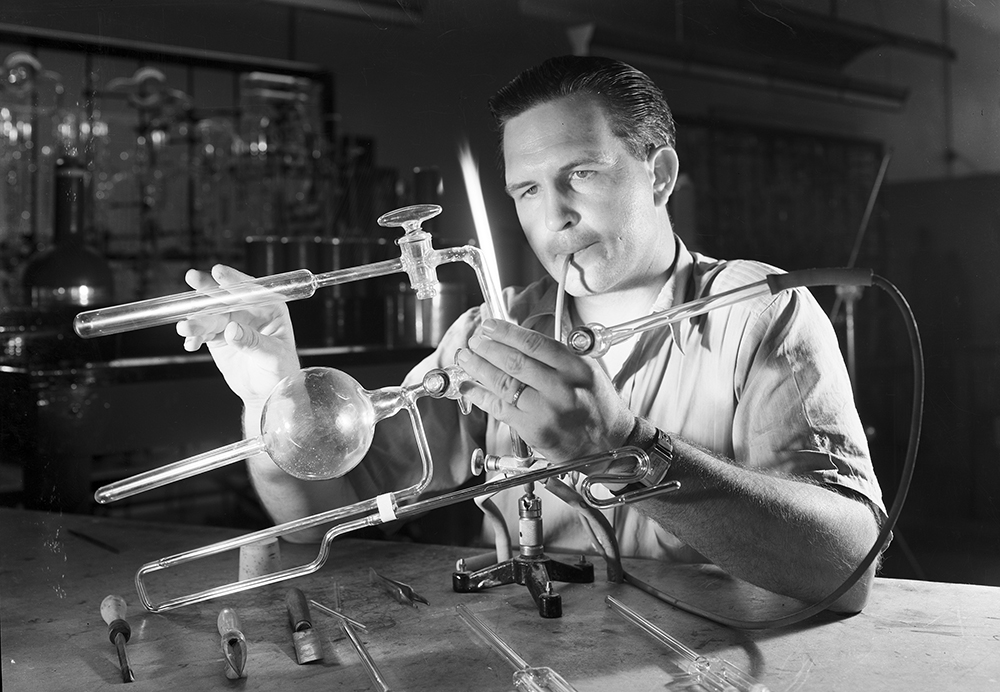
Short answer: Pyrex, Duran and Simax are brands with separate histories, connected by low-expansion borosilicate glass used in laboratories and creative glassworking. They are not interchangeable names for every heat-resistant glass. Identify the actual glass type and product: Pyrex laboratory glass, consumer bakeware and rods intended for fabrication require different information.
A clear tube on a lampworker’s bench comes out of laboratory needs: measuring temperature, containing chemicals, building apparatus and surviving temperature changes. The same properties made it an artist’s material, which is why a brand stamped on a kitchen dish tells a different story from a material specification on a case of tubing.
Borosilicate is a material family; Pyrex is a brand
Glass is a formulated material. Changing its composition changes how it behaves. The Corning Museum of Glass describes the original Pyrex formulation as borosilicate, with silicon, boron, sodium and aluminum among its constituent elements. Its low thermal expansion means less dimensional change during heating and cooling than common soda-lime glass. [3]
That property helps explain its appeal, but “borosilicate” is broader than a single formula. For a glassworker, the next questions are which borosilicate, supplied in what form, and intended for which process.
| Name on the label | What it identifies | What to check next |
|---|---|---|
| Borosilicate | A glass family | The specified composition or glass code |
| Pyrex | A brand used for different product categories | Laboratory versus consumer product, plus its material specification |
| Duran | A technical-glass and laboratory-glassware brand | Tubing/rod documentation versus finished-ware documentation |
| Simax | Kavalierglass’s borosilicate brand | The identified rod, tube or finished product |
| COE 33 / glass 3.3 | A familiar expansion designation | Units, measurement interval and evidence for the intended combination |
The distinctions become clearer when the companies are followed separately. Their histories overlap in applications; they are not stages in one corporate succession.
Otto Schott and the laboratory before Pyrex
SCHOTT dates Otto Schott’s development of borosilicate glass for technical applications to 1887. Its historical account identifies thermometers from 1891, laboratory glassware from 1893 and lamp cylinders from 1895 among the early applications. [1]
SCHOTT’s chronology places pharmaceutical FIOLAX tubing in 1911, alongside its laboratory glass: one company, several borosilicates for different requirements. A shared manufacturer and the word “borosilicate” therefore do not establish that two glass types belong in the same lampworked assembly. [1]
Pyrex: an industrial material finds a kitchen
Corning’s route into bakeware began with Nonex, a heat-resistant glass used in railway lanterns and other industrial products. The museum’s account describes the problem of hot lantern glass breaking when exposed to cold conditions. Corning wanted further applications for a material developed to withstand such changes. [2]
Bessie “Becky” Littleton supplied a practical question. After a ceramic casserole failed, she wondered whether the glass her husband Jesse was researching could work for baking. He brought home cut-down Nonex battery jars. Her cooking trials helped demonstrate the possibility. Eugene Sullivan and William C. Taylor subsequently developed and patented a cooking-glass formula. [2]
Pyrex housewares entered the market in 1915. The museum’s centenary exhibition placed women at the center of the product’s domestic history, documenting how they helped Corning’s designers and engineers develop glassware for the home. [5]
The cake story is memorable because it puts materials research on a kitchen table. It should not erase the laboratory work around it. The museum’s separate account of the Littleton family emphasizes that development involved many people and experiments. [4]
Nor should the historical experiment become a modern instruction. Today’s finished bakeware has its own use limits. A story about an experimental battery jar in the development of a new product does not establish that household glass is suitable stock for an artist’s torch.
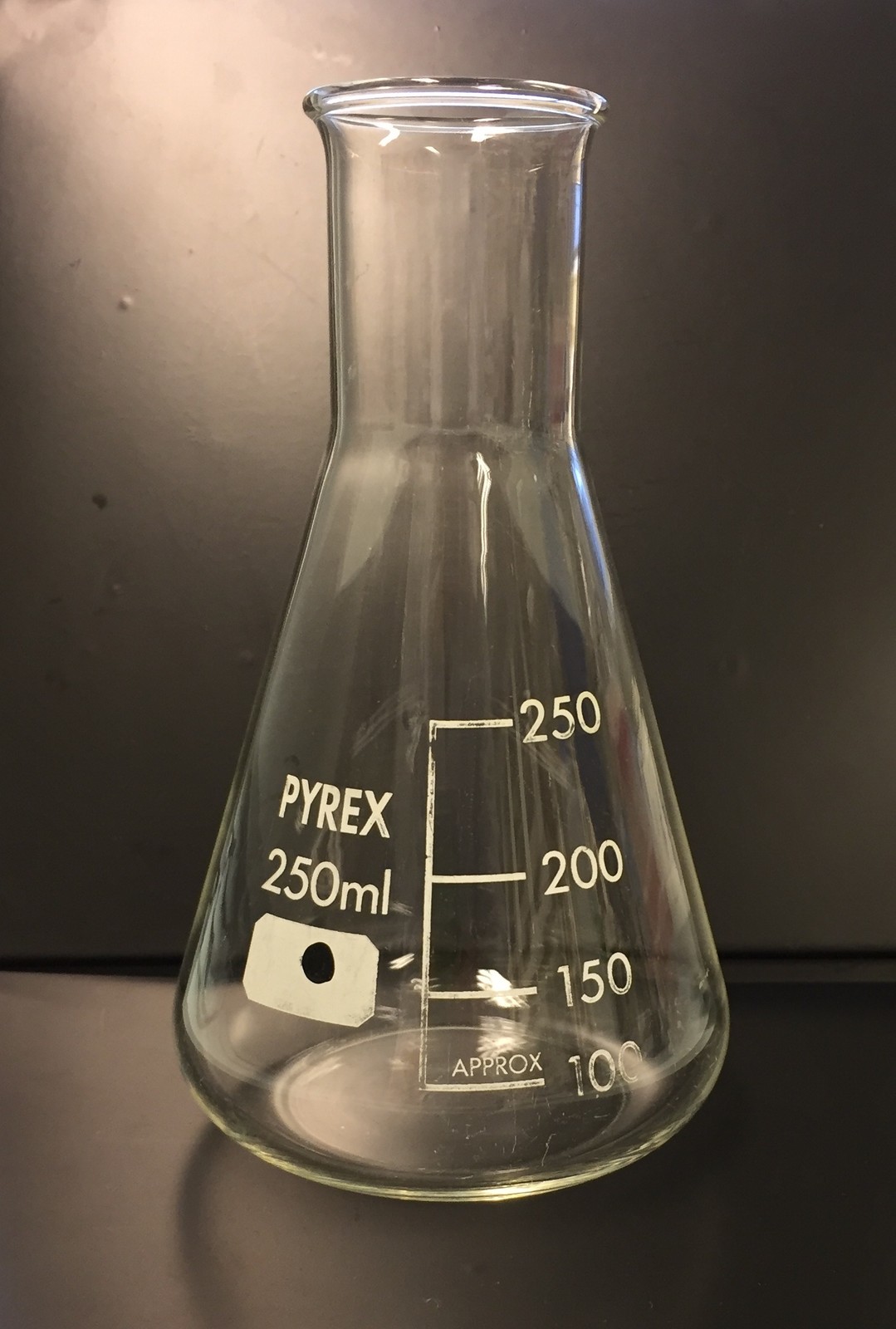
Is all Pyrex borosilicate?
No. The current Pyrex Home FAQ states that its production includes both soda-lime and borosilicate glass. It also prohibits direct-heat uses such as stovetops and broilers for the bakeware covered by its instructions. Read the actual product information rather than using a general claim about “old” or “new” Pyrex. [14]
Laboratory documentation provides a different level of identification. Corning’s technical guide specifies Code 7740 borosilicate for its Pyrex brand labware. It separately describes low-actinic versions with a treated surface and PyrexPlus products with an exterior vinyl coating. The base material and the finished product’s treatment both matter. [12]
For lampworking, choose identified glass supplied for fabrication. The brand name alone does not answer whether a salvaged item has the right formulation, a coating, or an appropriate processing history. Letter case in a logo is not a substitute for product documentation.
Duran: distinguish the tubing from the finished bottle
Duran remains closely associated with SCHOTT, whose current product range includes tubes, rods and capillaries. The same official page states that Duran is a registered trademark of DWK Life Sciences GmbH and directs readers seeking finished laboratory bottles and flasks to DWK. [6]
So “who makes Duran?” needs the product category before it has a complete answer: tubing and rod point to SCHOTT, finished bottles and flasks to DWK.
SCHOTT’s February 2026 tubing datasheet identifies Duran as borosilicate glass 3.3 under ISO 3585. It gives material properties alongside chemical-resistance classifications. That document is more useful for identifying the glass than a photograph of a bottle carrying a familiar logo. [7]
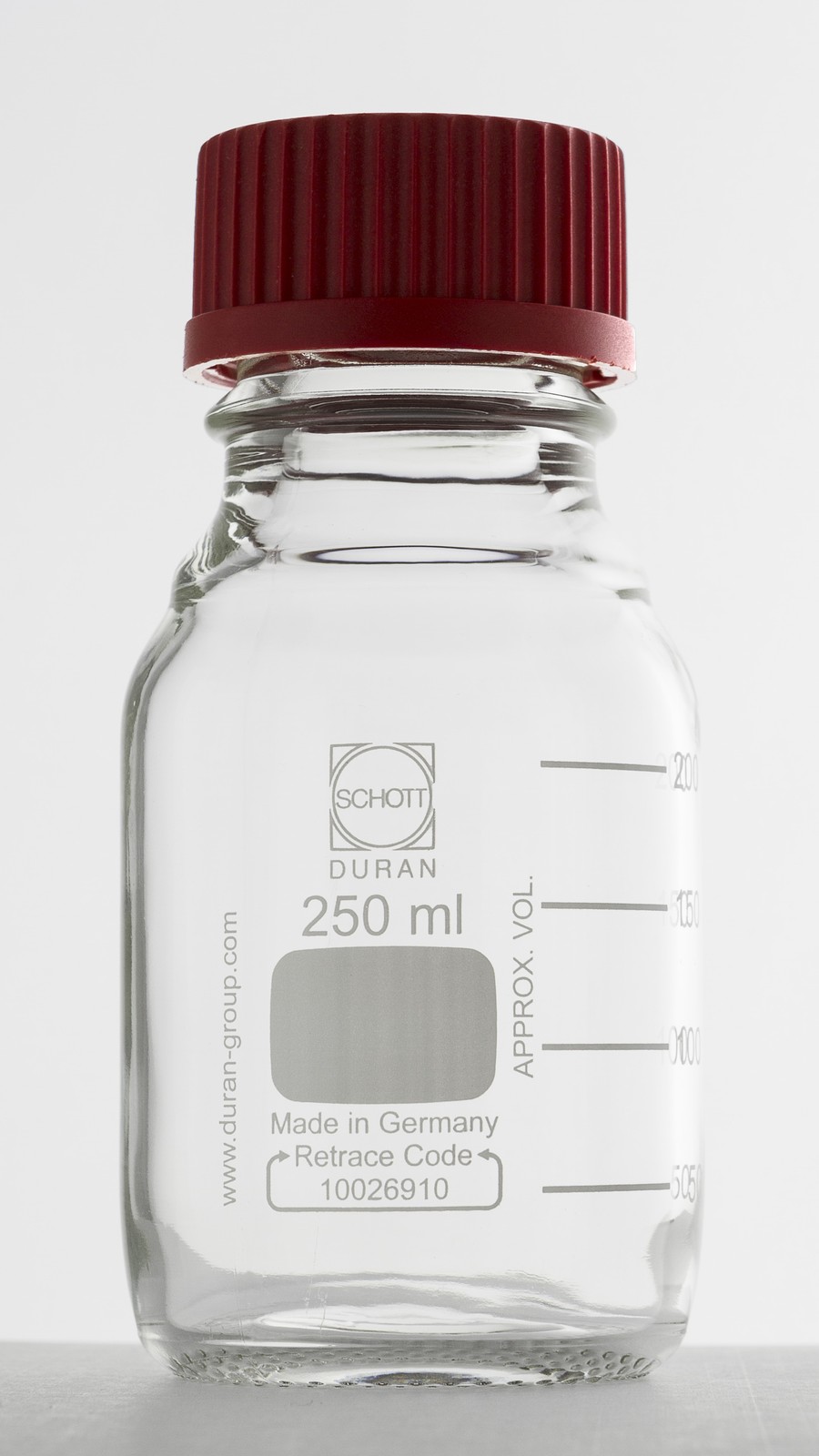
The bottle below, photographed in 2012, carries both SCHOTT and DURAN marks; it is a dated object, and the current documentation above establishes the present relationship.
Simax: a newer glass in a much older Czech glassworks
Kavalier’s history reaches back to 1837, when František Kavalír began laboratory-glass production at the Svatoprokopská glassworks in Sázava. That founding date is much earlier than the Simax material and trademark. [8]
The company’s illustrated chronology records Palex borosilicate laboratory glass in 1923 and a full ovenware collection designed by Ladislav Sutnar in 1931. Reconstruction after 1947 included tube production. It places the development associated with Miloš Volf and his team under 1954, followed by the Simax 3.3 trademark in 1958. [8]
These milestones show a manufacturer moving through laboratory, domestic and semi-finished glass. They also explain why “Simax since 1837” would compress the history too far: the glassworks’ ancestry and the named material have different starting points.
Today’s Kavalierglass describes a range spanning domestic, industrial, laboratory and technical glassware, tubes and industrial apparatus. It sells under its own Simax and Kavalier brands and also makes products under customers’ brands. [9]
Its technical data sheet identifies the Simax production plant in Sázava and the country of origin as the Czech Republic. The June 2026 tubing catalog covers ordinary tubing and rods alongside capillaries and shaped profiles. The lampworker’s clear rod is one form within a wider technical-glass business. [10, 22]
Editor’s note: Kavalier’s bilingual historical catalog calls the 1958 event a trademark in Czech, while its English translation uses “patented.” This article follows the Czech wording, ochrannou známku, and does not assert a patent number or patent grant.


What 7740, 3.3 and COE 33 tell a glassworker
The numbers describe different kinds of information. 7740 is a Corning glass code. 3.3 is an expansion designation. The familiar COE 33 expresses that approximate expansion using a different numerical scale.
The units make the relationship explicit: 3.3 × 10⁻⁶ per degree and 33 × 10⁻⁷ per degree describe the same magnitude. But a published value also belongs to a measurement interval. Retain that interval when comparing specifications.
| Identified material and document | Published mean linear expansion | Measurement interval |
|---|---|---|
| Corning Code 7740 material-properties sheet | 32.5 × 10⁻⁷/°C | 0 to 300°C |
| Duran tubing, February 2026 datasheet | 3.3 × 10⁻⁶ K⁻¹ | 20 to 300°C |
| Simax, June 2026 tubing catalog | 3.3 × 10⁻⁶ K⁻¹ | 20 to 300°C |
Values are reproduced from the identified documents, not converted into a compatibility score. [7, 10, 11]
The shared low-expansion territory is why these materials appear together in scientific and artistic borosilicate. It does not make every product bearing one of these names identical, or let an unidentified color be approved from a nominal number.
Kavalier explicitly describes joining Simax with other brands of the same borosilicate type in its processing guidance. Preserve the qualification: the same type, identified by documentation. Its catalog also relates thermal-shock behavior to wall thickness, shape, surface condition and stress. Material identity and the finished construction both matter. [10]
The separate compatibility deep dive explains why a matching expansion label cannot replace a test of the actual glass combination.
A softening point is not a torch setting
Corning’s 7740 sheet separates working, softening, annealing and strain points, each associated with a specified viscosity. SCHOTT similarly distinguishes the working, softening and annealing points of Duran. [7, 11]
These are reference properties of the glass. A burner heats a particular shape over time; it is not a device set to the datasheet’s softening temperature. Likewise, one annealing-point number does not supply a complete cooling program for a sculpture with varying thickness.
Use the current maker’s processing instructions for the identified glass and an annealing plan appropriate to the work; the COE 33 soak guide covers how lampworkers apply boro anneal and strain figures in practice. The clear-borosilicate quality guide addresses the purchasing questions separately, including dimensions and visible defects.
How laboratory glass became an artist’s material
The bridge is unusually direct: tubing and rod can be starting materials for both apparatus and art (our boro tubing basics covers the first skills at the torch). Corning’s current technical-applications page describes C33, which it calls a 7740 equivalent, in scientific vessels and artistic glassblowing. It specifically connects the material with both glassblowing and lathe work. [13]
Scientific training can cross that boundary too. The Corning Museum’s biography of Katie Severance describes scientific apparatus work at Princeton, later borosilicate fabrication on a glass lathe, and artistic study with Paul Stankard. Her subsequent practice combines scientific lathe skills with floral sculpture. This is a documented individual path between the two disciplines. [15]
Other artists use the material without building a literal laboratory reference. The museum identifies Kit Paulson’s practice with flameworked borosilicate, intricate construction and objects that draw on historical forms and natural processes. Clear glass can become a deliberate visual language rather than a neutral carrier for color. [16]
The Littleton family provides a further historical connection. Jesse and Becky’s son Harvey became a founder of the Studio Glass Movement. That family relationship joins two important glass histories, but it should not be stretched into a claim that the whole studio movement used Pyrex or that borosilicate art began with one person. [4]
Modern uses also extend beyond the torch. SCHOTT’s art and design brochure identifies Duran in Tim Morgan’s Aurora in London and in architectural and lighting applications. Technical glass can become part of a work through assembly and design as well as hot manipulation. [21]
This is a different inheritance from the patterned cane in the Moretti and Effetre story. There, prepared color and internal pattern are central. Here, the starting advantages include clear material, defined geometry and published physical behavior. Both histories end with another maker transforming what the factory supplies.
Reading the names without losing the material
For a working bench, keep three records together: the brand, the actual glass designation, and the supplied form. “Duran rod,” “Simax tubing” and “Pyrex laboratory flask” carry more information than “heat-resistant glass,” but they still answer different questions.
Retain the label and applicable technical document when organizing stock. Date the document, particularly when using older material. Historical familiarity is useful context; traceable identification is what lets another maker understand a test, reproduce a construction or investigate a failure.
Related guides
- Clear borosilicate quality: the practical comparison of technical specifications and defects.
- Soft glass, borosilicate and quartz: understanding the wider material families.
- Moretti to Effetre: the companion history of colored rods and patterned cane.
- Annealing schedules for glass: connect the material with a suitable cooling process.
Sources
Manufacturer, museum and original photographic records accessed October 8, 2026 UTC. Photographs have individual credits and documented context. Maker claims about performance apply to their identified products.
[1] SCHOTT, Innovation history. Development and application milestones.
[2] Corning Museum of Glass, The Beginning of Pyrex, May 13, 2015. Nonex, the Littletons and development of bakeware.
[3] Corning Museum of Glass, The Science Behind Pyrex Glass, by chief scientist Glen Cook. Composition and thermal expansion.
[4] Corning Museum of Glass, The Littletons. Research context and the connection to Harvey Littleton.
[5] Corning Museum of Glass, America’s Favorite Dish. Pyrex’s 1915 housewares introduction.
[6] SCHOTT, Duran tubing. Current product formats, trademark attribution and finished-labware referral.
[7] SCHOTT, Duran technical data, February 2026. Expansion interval and viscosity reference points.
[8] Kavalierglass, Collection catalog, printed pages 4 and 5. Bilingual company chronology; Czech wording governs the trademark distinction.
[9] Kavalierglass, About the company. Present manufacturing categories and brands.
[10] Kavalierglass, Tubing, rods and capillaries, 2026, technical conditions. Expansion, processing, formats and qualifications.
[11] Corning, Code 7740 material properties. Expansion and viscosity data for the specified glass.
[12] Corning, Glass technical information. Pyrex laboratory material and treated or coated variants.
[13] Corning, Other tube applications. C33, scientific apparatus and artistic uses.
[14] Pyrex Home, Frequently asked questions. Current statement that production includes both soda-lime and borosilicate; finished-bakeware use limits.
[15] Corning Museum of Glass, Katie Severance. Documented scientific and artistic glassworking experience.
[16] Corning Museum of Glass, Kit Paulson. Borosilicate artistic practice.
[17] Robert Yarnall Richie / DeGolyer Library, Southern Methodist University, Geophysical Service Inc., Dallas, June 5, 1939. Institutional photograph distributed with no known copyright restrictions. The original institution record is SMU item 1669.
[18] Pilarbini, 250 mL Erlenmeyer flask, 2018, CC BY-SA 4.0.
[19] Lucasbosch, Duran laboratory bottle, 2012, CC BY-SA 3.0.
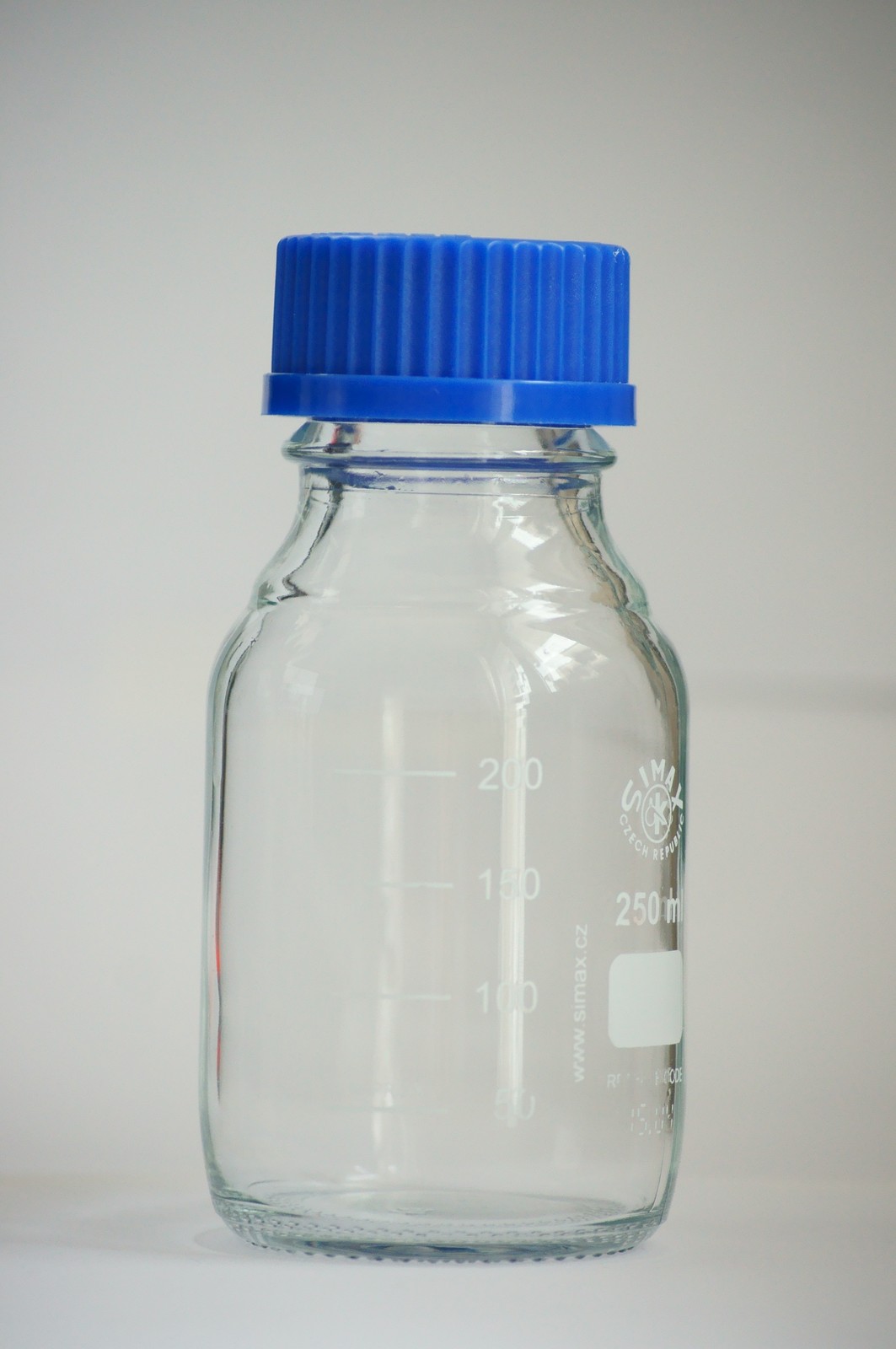
[20] Aleksander Sobolewski, Simax laboratory storage bottle, 2016, CC BY-SA 4.0.
[21] SCHOTT, Glass tubing and rods for architecture, art and design, June 2026. Named design and art applications.
[22] Kavalierglass, Simax technical data sheet, January 30, 2025. Manufacturer, production site and country of origin.