Glass Torch Technologies (GTT) Torches
GTT · USA · Active
Patented surface-mix torches from compact burners to large multi-stage systems.
- Patented Triple Mix
- 4-Way Mix
- Surface-mix flame
- Compressed-air injection
Glass Torch Technologies is a Tioga, Pennsylvania torch manufacturer. GTT says it machines, builds, and tests its torches by hand and holds patents covering its Triple Mix and newer 4-Way Mix technology.
Lineup at a glance
Every current GTT model in our catalog, cheapest first. Figures come from the manufacturer's own pages and manuals where we have them, and are labelled as estimates where they are ours. Oxygen is a rough sizing estimate, not a spec.
| Model | Stages | Jets | Oxygen (estimate) | Price | Mix |
|---|---|---|---|---|---|
| GTT Cricket | 1 | 5 | ~5.5 LPM | $255 | Surface mix |
| GTT Bobcat | 1 | 7 | ~8.5 LPM | $275 | Surface mix |
| GTT Lynx | 1 | 7 | ~9.5 LPM | $525 | Surface mix |
| GTT Cheetah | 1 | 13 | ~13 LPM | $645 | Surface mix |
| GTT Scorpion | 2 | 13 | ~9.5 LPM | $945 | Surface mix |
| GTT Sidewinder | 2 | 22 | ~15 LPM | $1,125 | Surface mix |
| GTT Phantom | 2 | 22 | ~16.5 LPM | $1,425 | Surface mix |
| GTT Mirage | 2 | 40 | ~26 LPM | $1,975 | Surface mix |
| GTT Delta Elite | 2 | 57 | ~30 LPM | $2,575 | Surface mix |
| GTT Kobuki | 3 | 49 | ~33 LPM | $3,550 | Surface mix |
| GTT Ninja | 3 | 72 | Not published | $4,000 | Surface mix |
| GTT Samurai | 3 | 72 | Not published | $4,000 | Surface mix |
| GTT Delta Mag | 3 | 88 | ~54 LPM | $4,250 | Surface mix |
| GTT Cobra | 3 | 130 | ~65 LPM | $5,500 | Surface mix |
| GTT Viper | 3 | 200 | Not published | $7,000 | Surface mix |
| GTT Quadzilla | 4 | Built to order | Not published | Built to order | Surface mix |
“Not published” means the maker does not publish that figure, not that it is zero. Prices without a dollar figure show our price band instead. Confirm the current spec and price with GTT before you buy.
Where GTT sits in the craft
GTT torches are a fixture of the borosilicate and production lampworking world, and the line is broad enough that a maker can step up from a compact starter to a large multi-stage burner without relearning how the flame behaves. That continuity matters when you are investing years of muscle memory at the bench, and it is a large part of why working boro artists so often compare flames and troubleshoot in GTT terms.
The signature technology
GTT is known for its patented Triple Mix technology, which builds on a surface-mix foundation with three-stage internal mixing that the company says produces a wider, more controllable flame. Triple Mix starts at the Lynx and runs up the line; the entry Bobcat and Cricket are standard surface-mix burners without it. A separate compressed-air option called 4-Way Mix is offered on larger models. In a surface-mix torch the fuel and oxygen meet at the face rather than inside the body, which keeps the mixing chamber cooler and gives the burner a characteristically clean, penetrating flame.
The practical payoff is a flame that drives heat into the center of thick glass instead of just washing the surface. That penetrating quality is why GTT torches are favored for solid boro and heavier functional work, where you need the core of the glass to move, not just the skin.
Because mixing happens at the face, surface-mix burners are also calmer at startup and less prone to the backfire 'pop' that can come with internally premixed designs. The compressed-air option on the larger models lets a maker push output further without scaling oxygen to match, which matters once oxygen supply becomes the real constraint on how hard you can run.
The line from Cricket to Quadzilla
The line starts with four single stage bench burners. The Cricket is the most economical of them, a 5 jet standard surface mix torch designed to get the best out of a small 5 LPM oxygen concentrator, and it is aimed at soft glass beadwork and first classes. The Bobcat adds two jets and a much wider flame envelope while staying standard surface mix: GTT says it runs well on a 5 LPM concentrator, is optimal on 8 LPM, and does extremely well on 10 LPM or tanked oxygen, which is why it is the usual first serious torch for someone heading toward boro. The Lynx, at $525, is where the patented Triple Mix begins, and its 7 jet face is the pinpoint detail flame the rest of the line gets measured against. The Cheetah closes out the singles with 13 ports in total, a 3 port center fire inside a 10 port outer ring, and it puts a lot of heat into a small torch with a broader flame than the Lynx.
Five two stage bench torches fill the middle. The Scorpion is the least expensive of them at $945: the standard version puts the 5 jet Cricket at the center of an 8 jet outer fire, 13 jets in all, and GTT sells a Lynx center version separately at 15 jets, which is the configuration the $945 listing covers. The Sidewinder is a 22 jet torch built around a 7 jet center fire that can be specified either as a standard mix Bobcat face or as a Triple Mix Lynx face, and GTT sells it as a hand torch with an on/off switch in the handle and as 2 and 4 stud bench versions at the same list price. The Phantom sets a Lynx style center inside a 15 jet outer ring for pipes, functional work and medium boro, and GTT also offers it as a hand torch with a thumb switch for the outer flame. The Mirage adds a second ring for 40 jets and moves into large boro and production work. The Delta Elite tops the group at 57 jets, a 7 jet Lynx center plus 50 outer jets in three rings, with the standard four stud bench model listed at $2,575 and the hand torch version priced separately.
Above them sit the multi stage production burners, all of them three stage Triple Mix. The Kobuki carries 49 jets, a 7 jet Lynx center, a 15 jet Phantom middle and a 27 jet outer ring, and GTT says it reproduces the Lynx, Phantom, Mirage and Delta Elite flames plus a wider one of its own. The Ninja and the Samurai both total 72 jets and both list at $4,000, and they differ in how those jets are arranged: the Ninja takes a Phantom middle and a 50 jet outer, the Samurai a Mirage middle and a 32 jet outer. The Delta Mag runs 88 jets, the Cobra 130 and the Viper 200, which spans everything from a Lynx pinpoint to a furnace size flame. At the top, the four stage Quadzilla is custom built to order rather than stocked, so its jet count varies with the configuration and GTT publishes no list price for it. The compressed air 4-Way Mix option lives at this end of the line: our catalog records a compressed air option on the Kobuki, Ninja, Samurai and Quadzilla, and the point of it is extra output without scaling the oxygen supply to match.
Who it suits
GTT torches reward intermediate and advanced makers working primarily in borosilicate, and especially anyone heading toward production. If you do detail and pinpoint work, the Lynx-class flame is hard to beat; if you build thick functional pieces, the Delta-class and multi-stage torches give you the heat base to do it without fighting your torch.
Beginners are not shut out. The Bobcat, Cheetah, and Cricket are approachable entry points, and because they share the family's flame behavior, they set up a clean upgrade path later. The Bobcat in particular is a smart first 'real' torch for someone on a single concentrator who wants to grow into boro. Soft-glass artists are served too, though GTT's center of gravity is clearly the boro and production world.
The hand-torch versions answer a more specific need. If you do lathe work, large assembly, or off-mandrel sculpting, the hand-torch versions of the Delta Elite, Sidewinder, and Phantom let you bring the GTT flame to the work rather than the work to the bench.
Running a GTT torch
Two numbers decide whether a GTT torch fits your shop, and pressure is the friendlier of the two. GTT torches run on fuel pressure as low as 1/4 psi, which is inside what an ordinary household natural gas line delivers, and that is why a GTT bench burner will often run on house gas with no booster in the way. Our Cricket entry records 1/4 psi fuel and 3 psi oxygen as its low end, and the Bobcat sits in the same territory. None of that is a promise about your own bench: pipe size, run length and whatever else is on the meter all change what actually reaches the torch, and the manual for your model is the figure that governs.
Oxygen is the running cost, and on this site it is an estimate rather than a spec. The figures in the table above come from GTT's own flow rate chart at the largest usable flame on propane, so they are ceilings rather than what you will draw at a working flame, and GTT puts natural gas consumption at roughly 2.5 times the propane figure. For scale, the Cricket estimate is about 5.5 LPM, the Bobcat about 8.5, the Lynx about 9.5, the Phantom about 16.5, the Delta Elite about 30 and the Cobra about 65. GTT does not publish a flow figure for every model, so a few of the largest burners carry no estimate at all.
Flashback protection is where copying a generic rule does the most damage. Fit the flashback protection your torch and your gas supply actually call for, and take that from the maker rather than from a forum. GTT is specific about it: the company says its flashback arrestors need roughly 5 to 7 psi to open, so they do not belong on the output of an oxygen concentrator, where they may fail to open and will severely restrict flow. For a concentrator setup GTT's instruction is an arrestor at the fuel source, with a flame arrestor as the low pressure device. Nothing here replaces your torch manual and GTT's current instructions, which take precedence, so confirm the pressures and the protection your model needs with GTT before you buy.
Honest trade-offs
GTT torches are a premium purchase, and the larger production burners in particular represent a serious investment in both the torch and the oxygen to feed them. Surface-mix burners at the high end can be thirsty, so plan your oxygen supply around the model you actually want; a Mirage, Delta Mag, or Kobuki will outrun a small concentrator setup quickly.
Lead times and availability can vary, and configuring the right stage count, mount, center fire, and air-injection options is worth a conversation with GTT before you buy. The buying process rewards patience and a clear idea of which model actually matches your work.
How to read this catalog
Jet counts and stage layouts are usually well documented by GTT. Oxygen figures in this catalog may be converted from GTT's CFH flow table, so they are reference values tied to stated test conditions, not universal operating recommendations. Prices and configurations should be checked on the specific current product page.
The GTT torch lineup
-
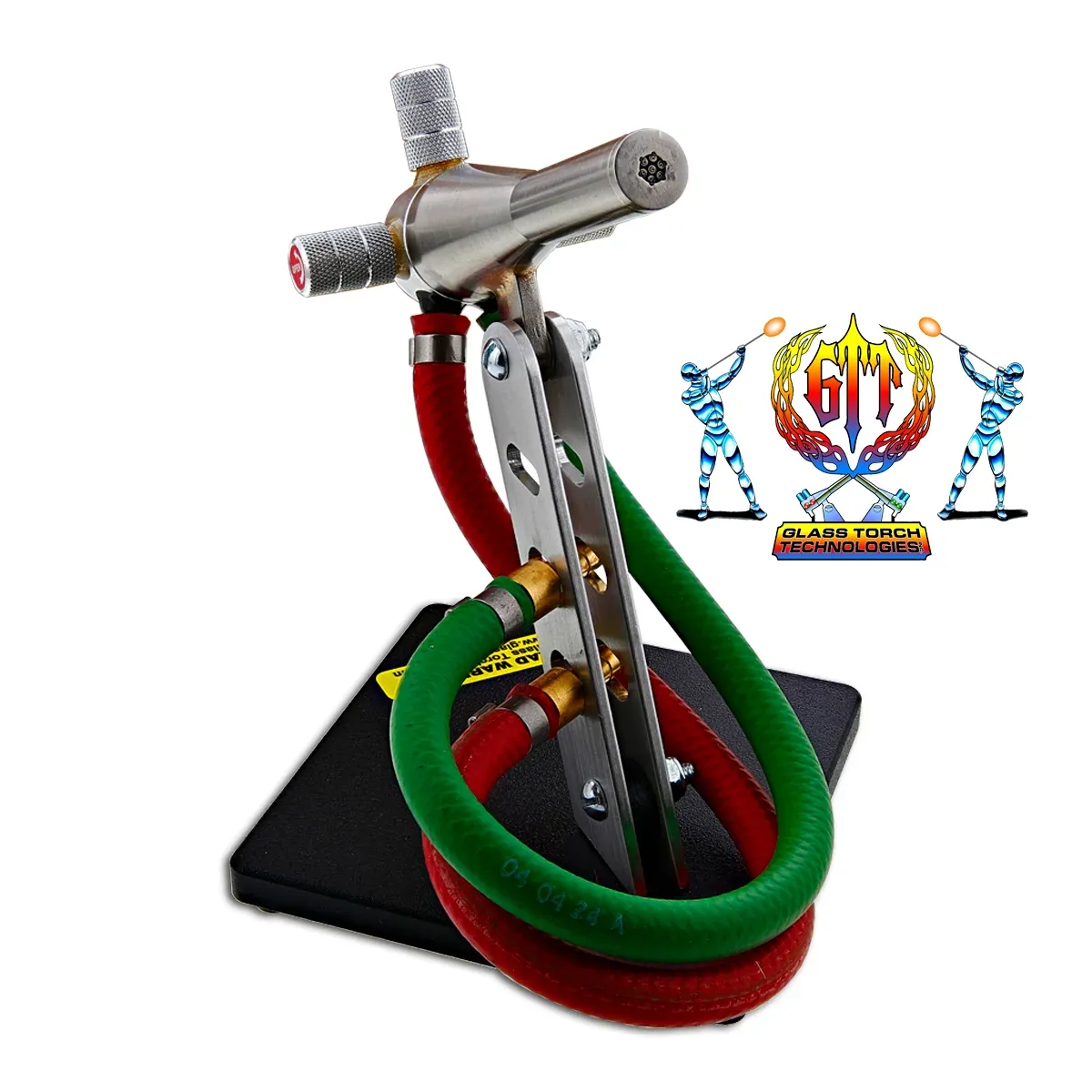 GTT Lynx Bench · Surface mix
- Oxygen
- ~9.5 LPM
- Skill
- Intermediate, Advanced
- Price
- $525
-
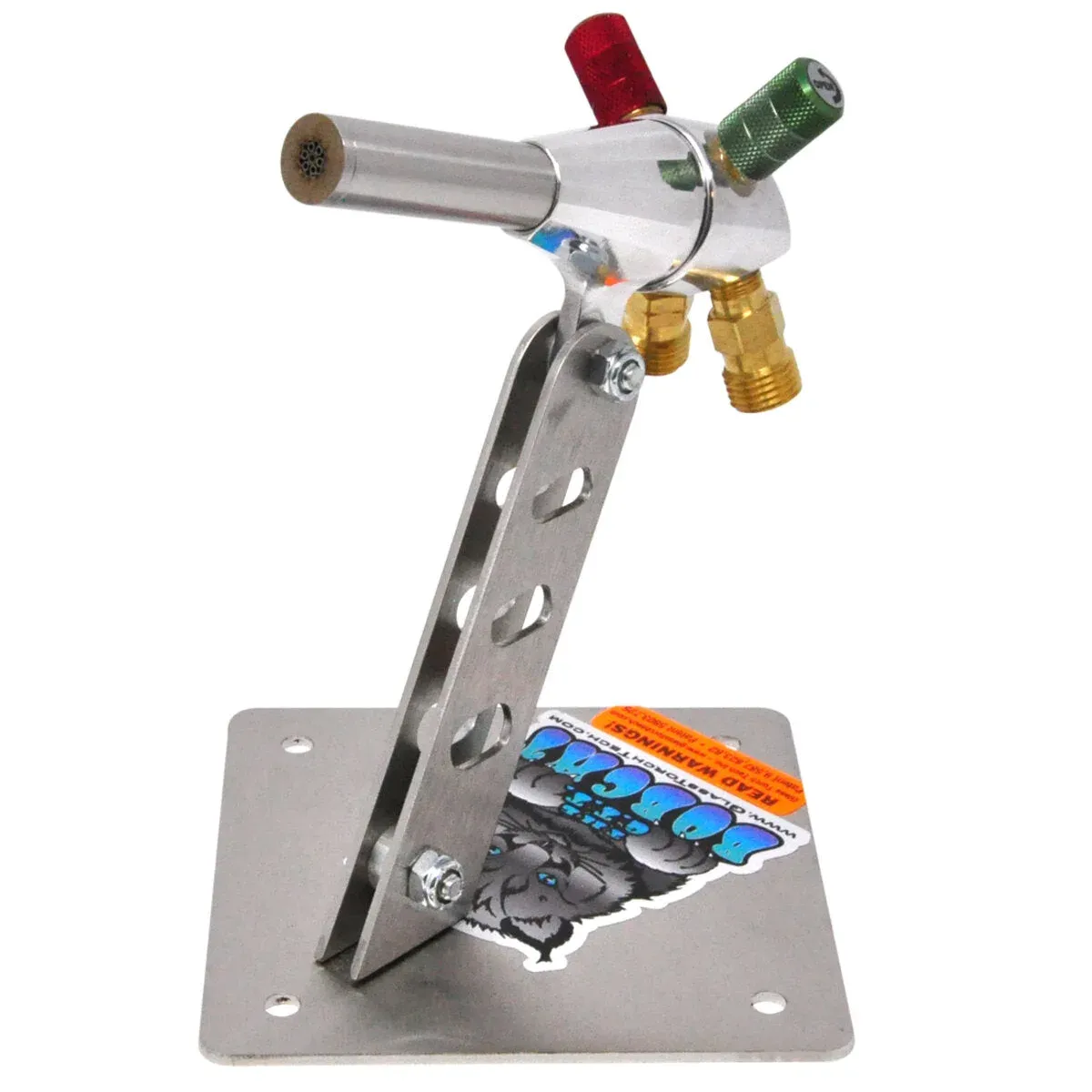 GTT Bobcat Bench · Surface mix
- Oxygen
- ~8.5 LPM
- Skill
- Beginner, Intermediate
- Price
- $275
-
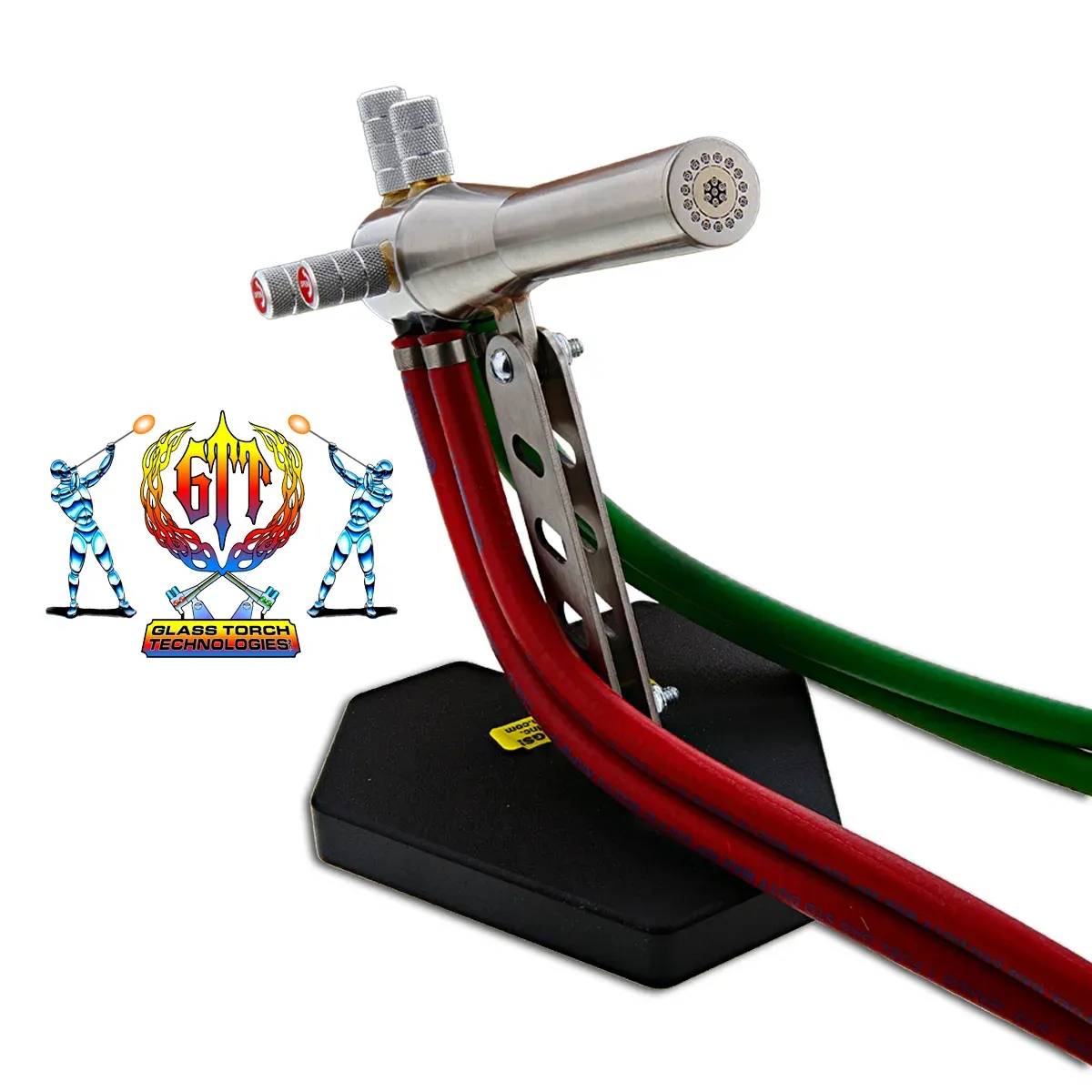 GTT Phantom Bench · Surface mix
- Oxygen
- ~16.5 LPM
- Skill
- Intermediate, Advanced
- Price
- $1,425
-
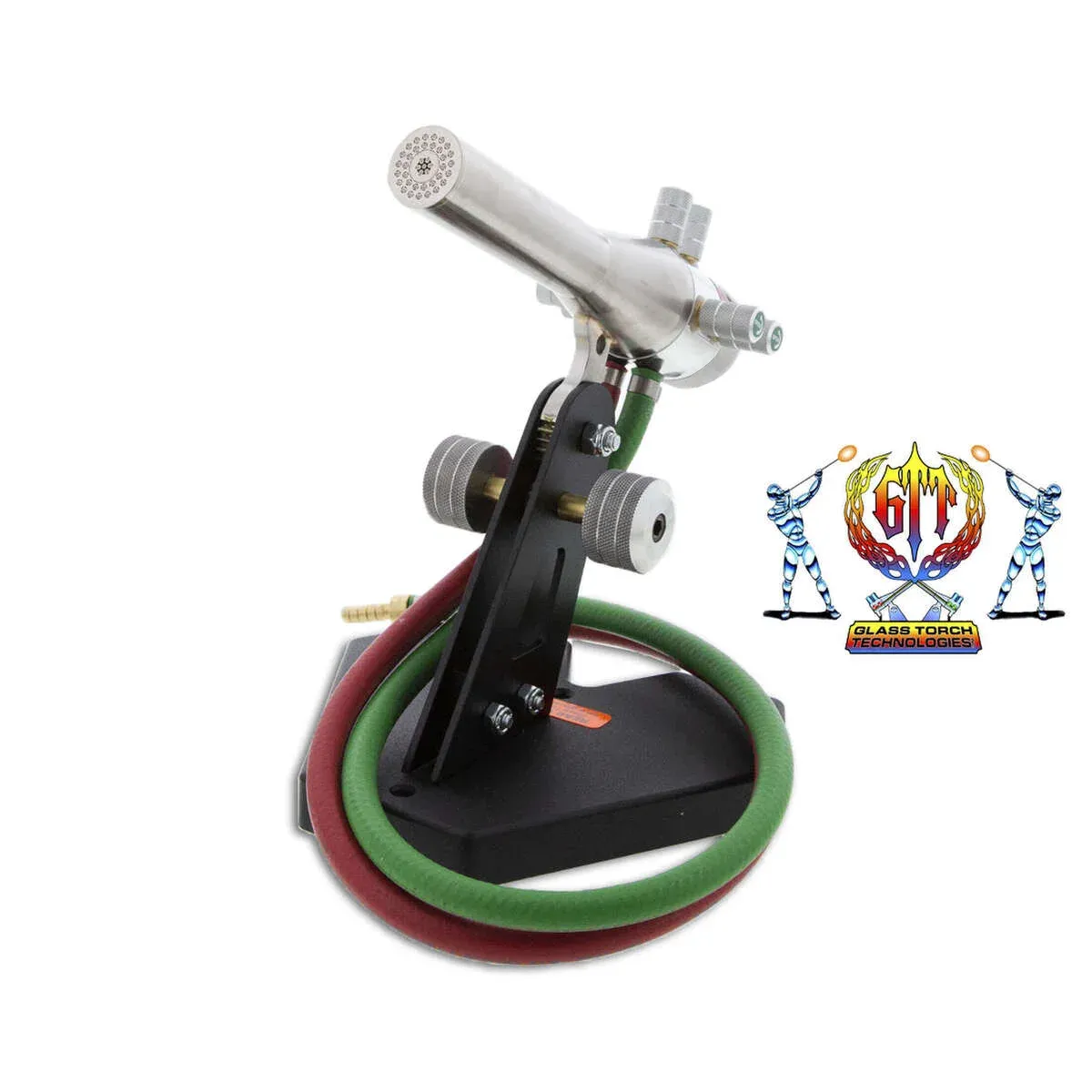 GTT Mirage Bench · Surface mix
- Oxygen
- ~26 LPM
- Skill
- Advanced
- Price
- $1,975
-
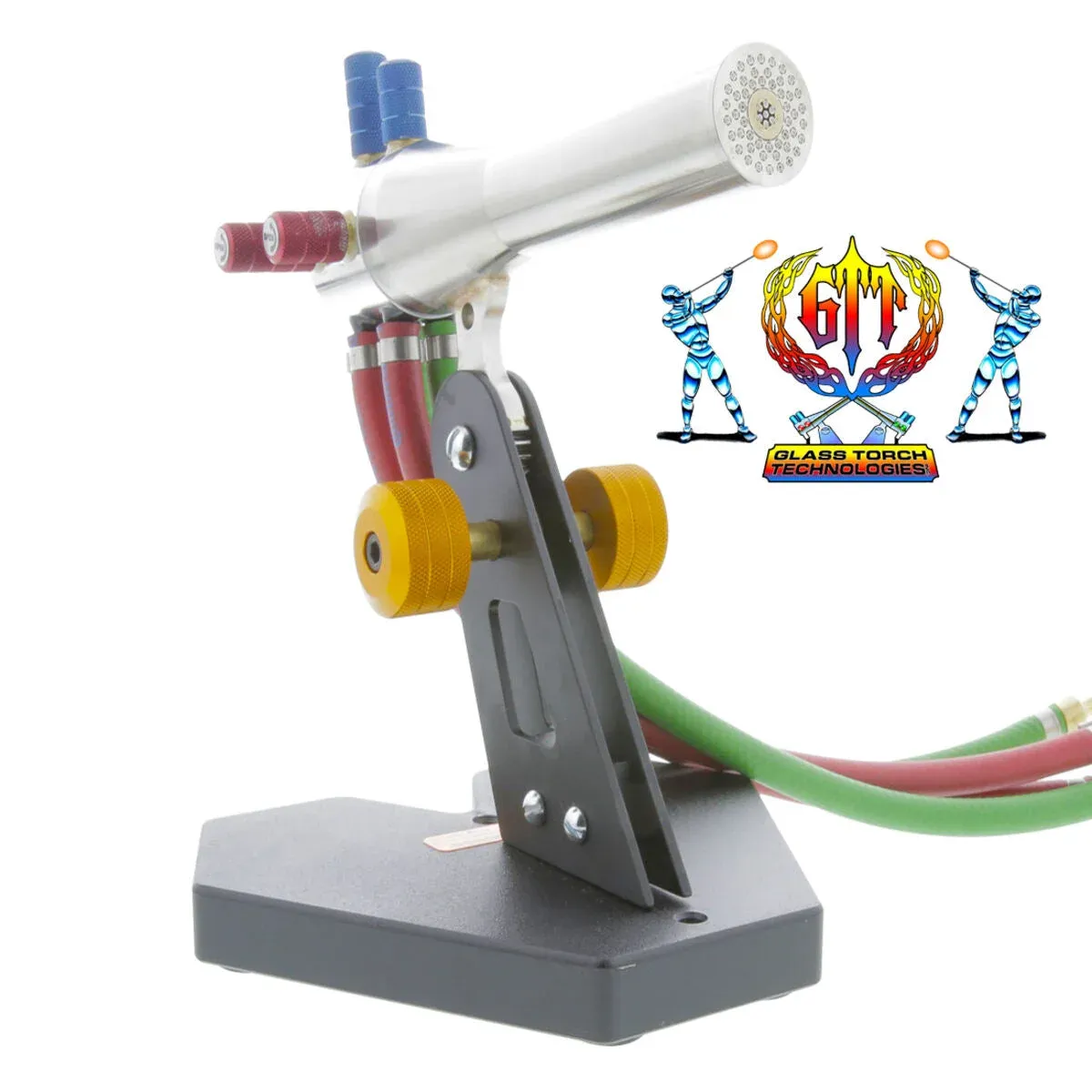 GTT Delta Elite Bench or hand · Surface mix
- Oxygen
- ~30 LPM
- Skill
- Advanced
- Price
- $2,575
-
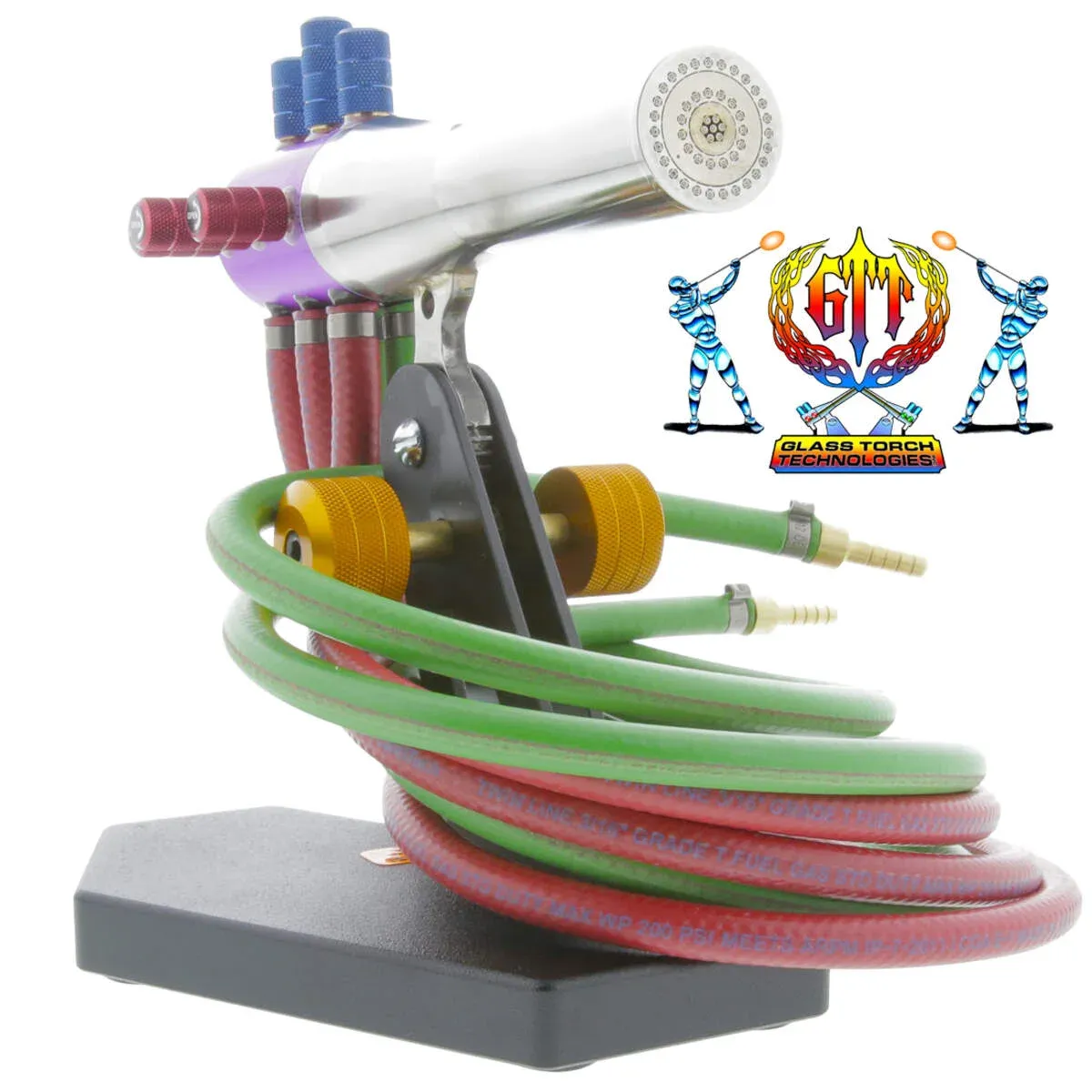 GTT Kobuki Bench · Surface mix
- Oxygen
- ~33 LPM
- Skill
- Advanced
- Price
- $3,550
-
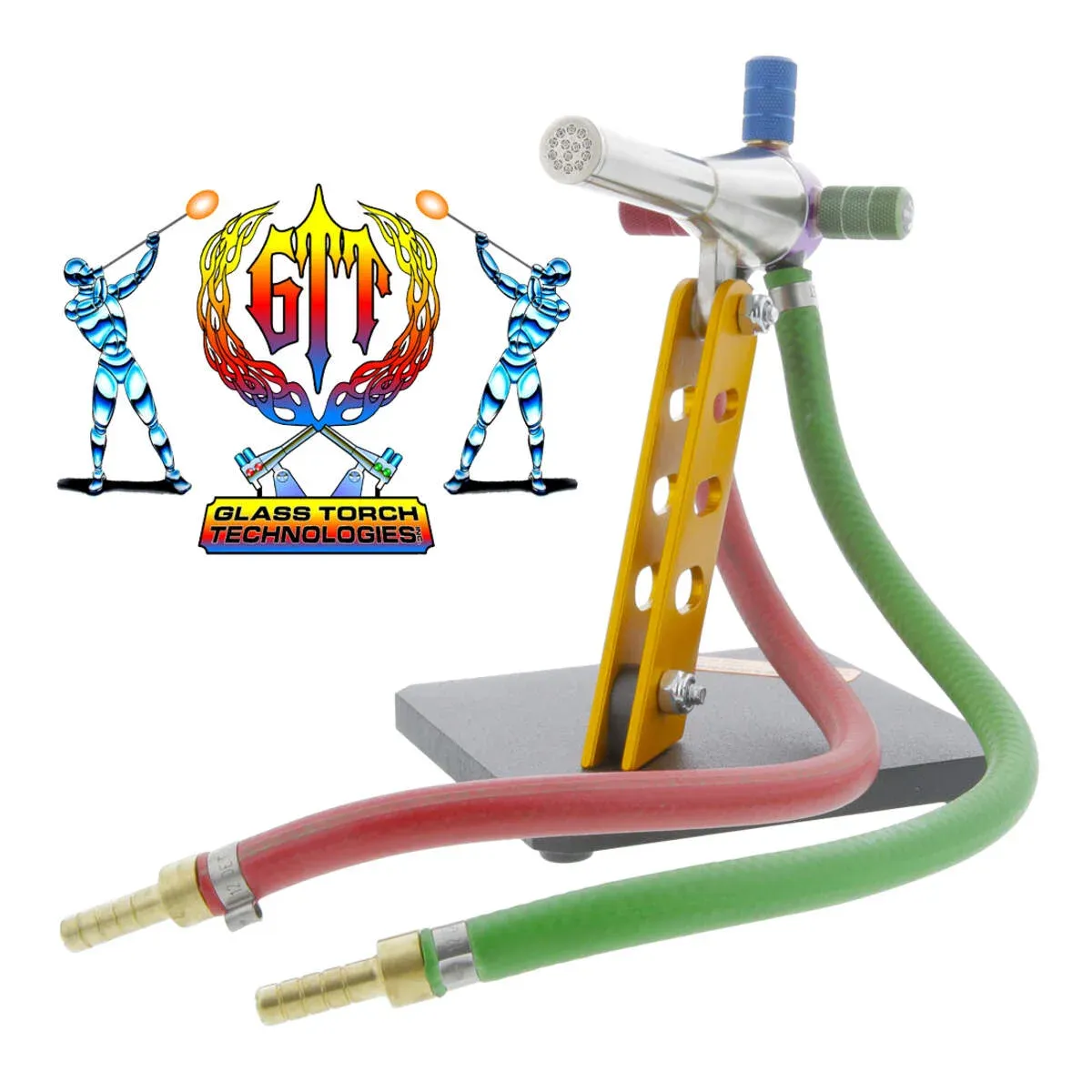 GTT Cheetah Bench · Surface mix
- Oxygen
- ~13 LPM
- Skill
- Beginner, Intermediate
- Price
- $645
-
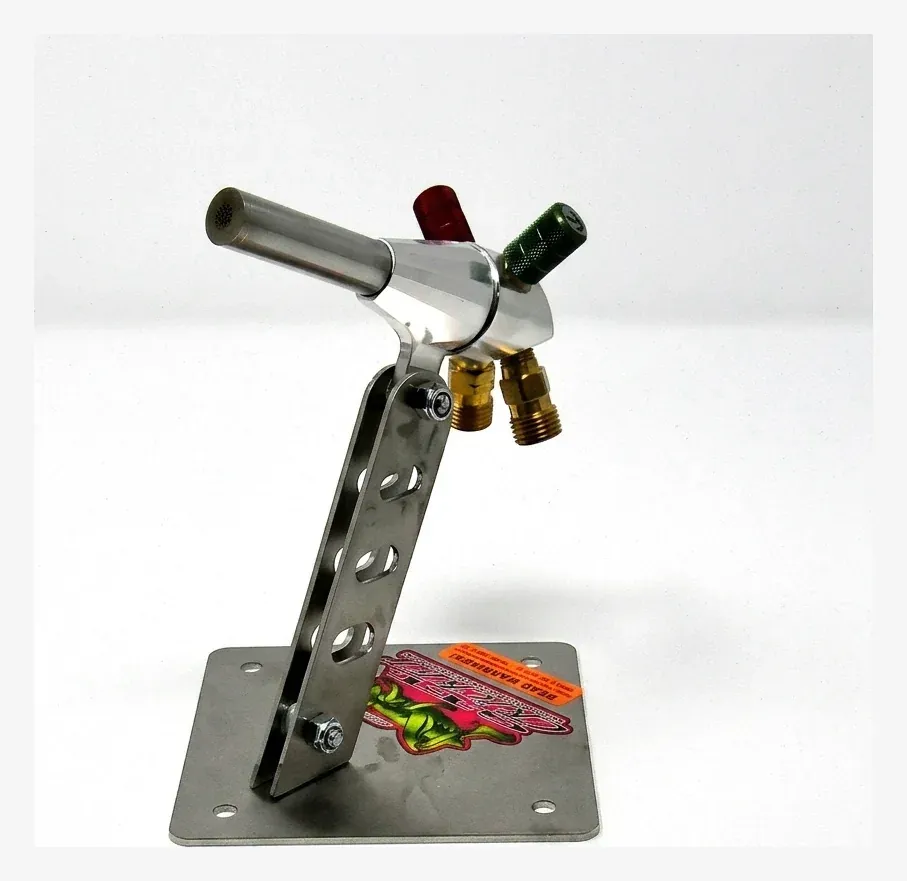 GTT Cricket Bench · Surface mix
- Oxygen
- ~5.5 LPM
- Skill
- Beginner
- Price
- $255
-
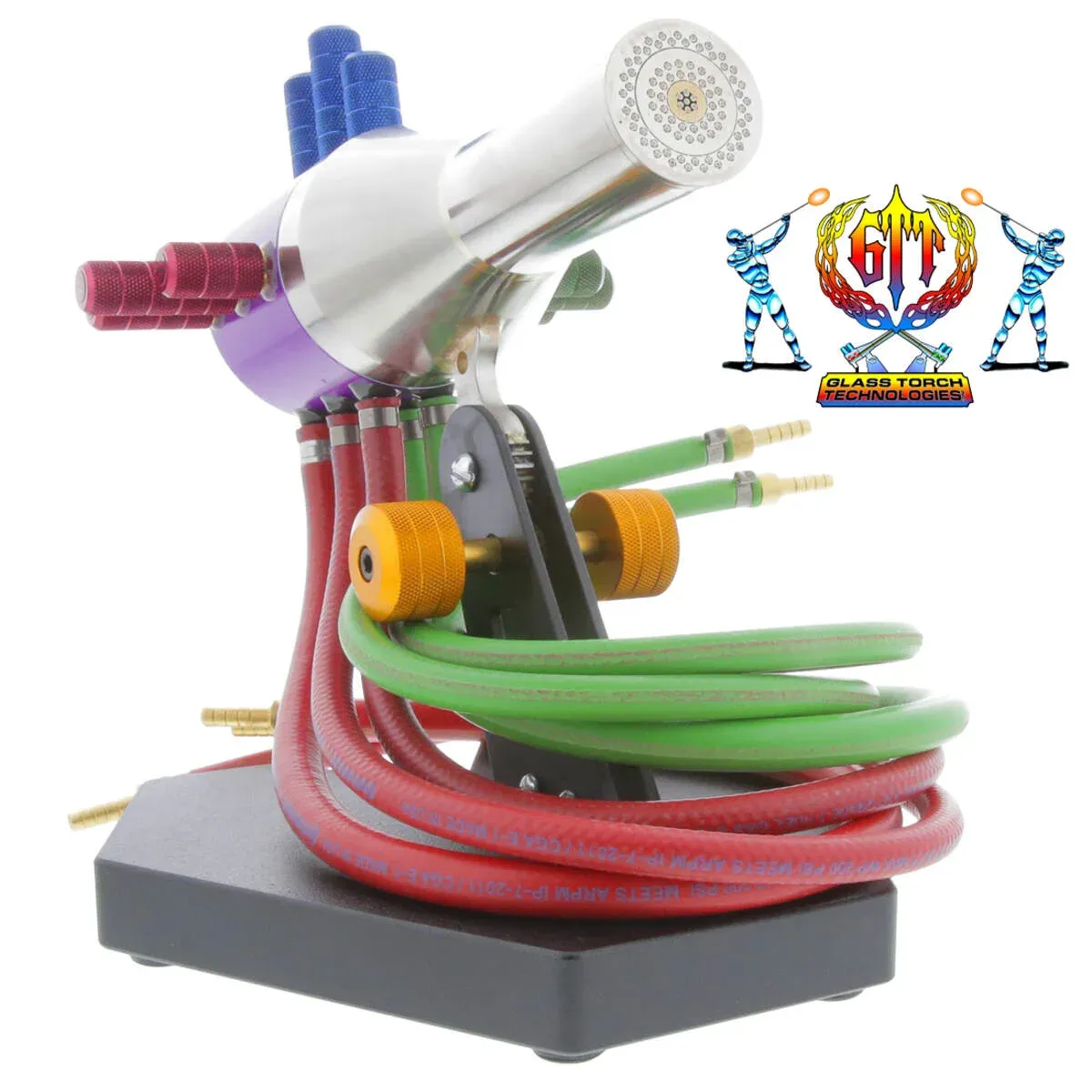 GTT Delta Mag Bench · Surface mix
- Oxygen
- ~54 LPM
- Skill
- Advanced
- Price
- $4,250
-
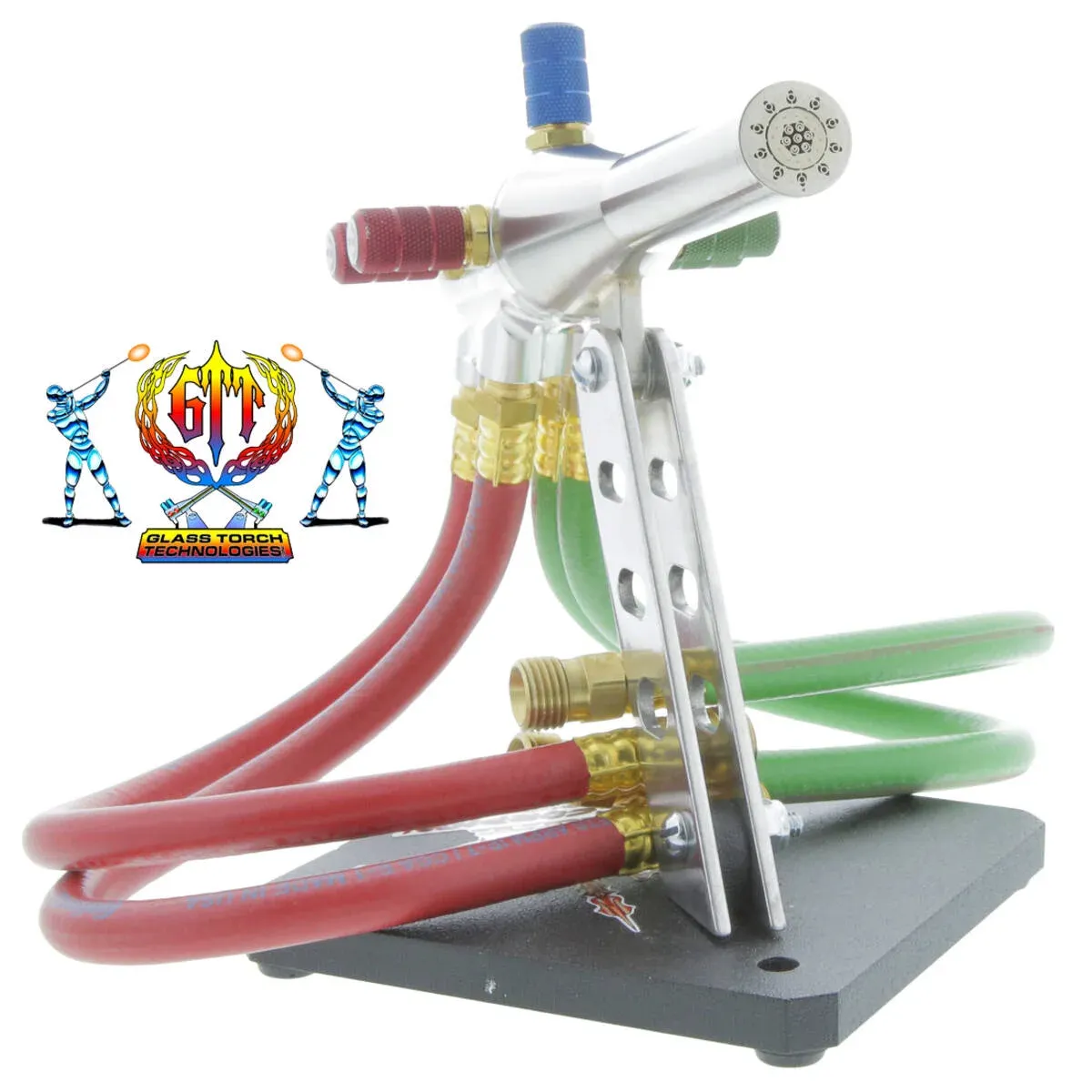 GTT Scorpion Bench · Surface mix
- Oxygen
- ~9.5 LPM
- Skill
- Intermediate, Advanced
- Price
- $945
-
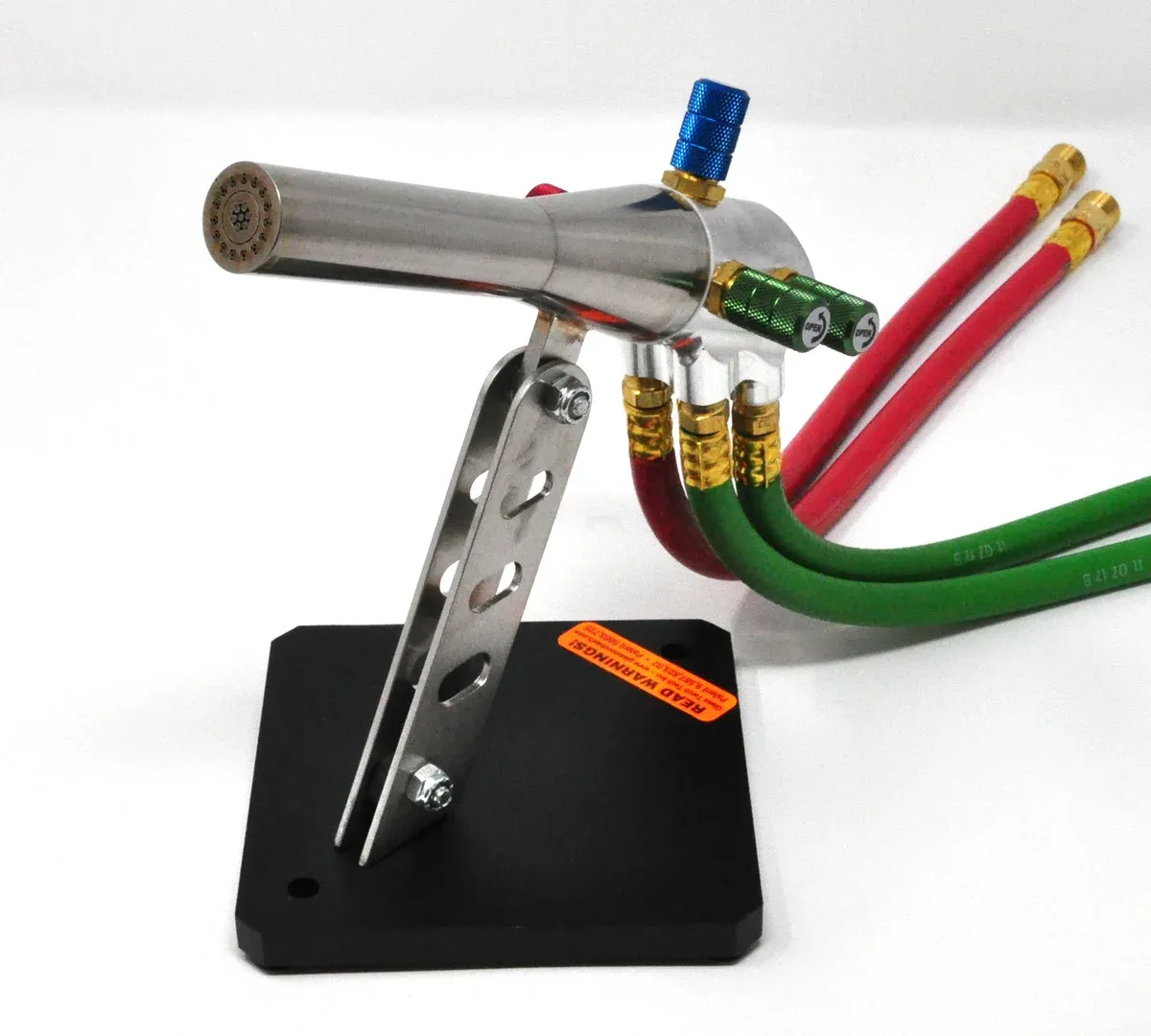 GTT Sidewinder Bench or hand · Surface mix
- Oxygen
- ~15 LPM
- Skill
- Intermediate, Advanced
- Price
- $1,125
-
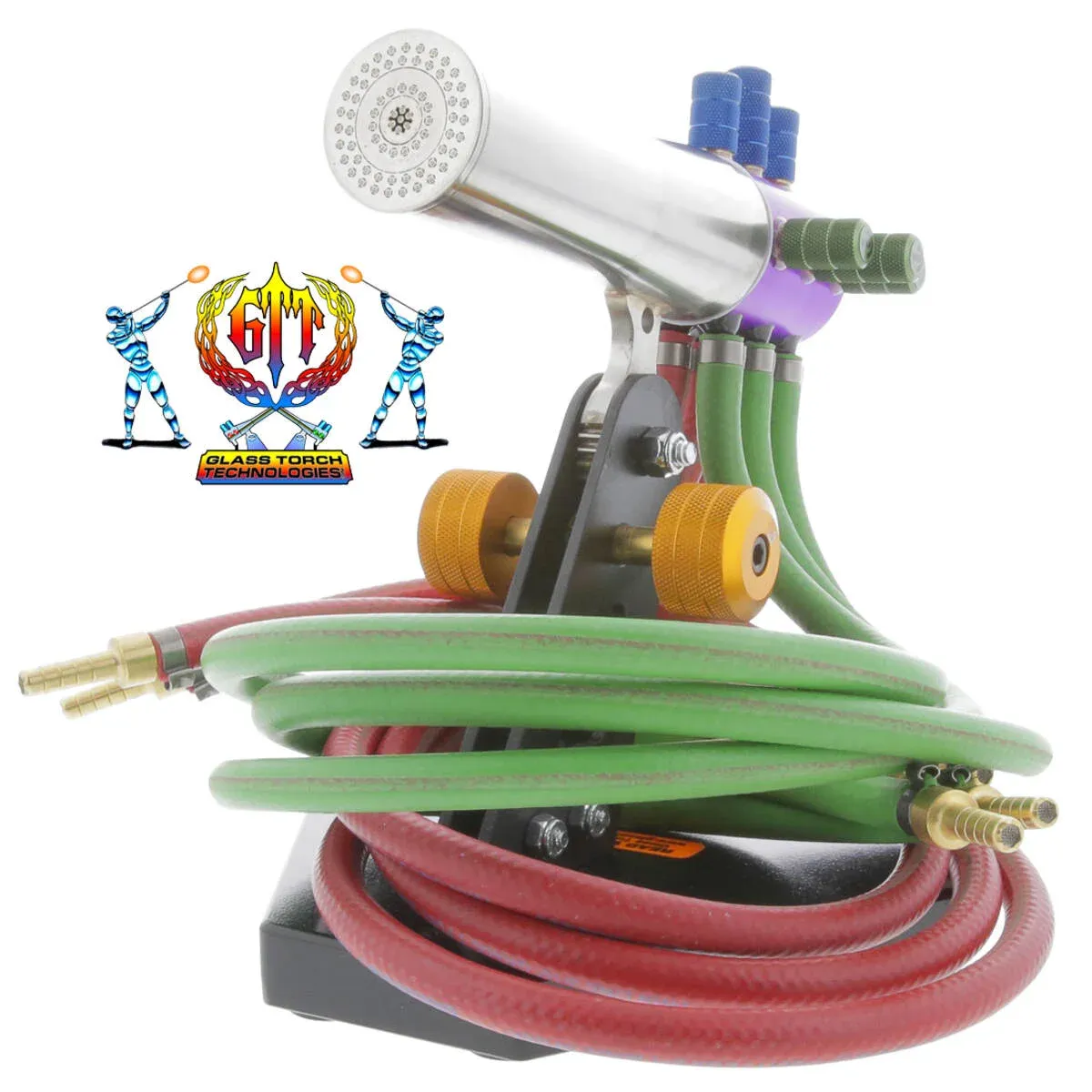 GTT Ninja Bench · Surface mix
- Oxygen
- n/a
- Skill
- Advanced
- Price
- $4,000
-
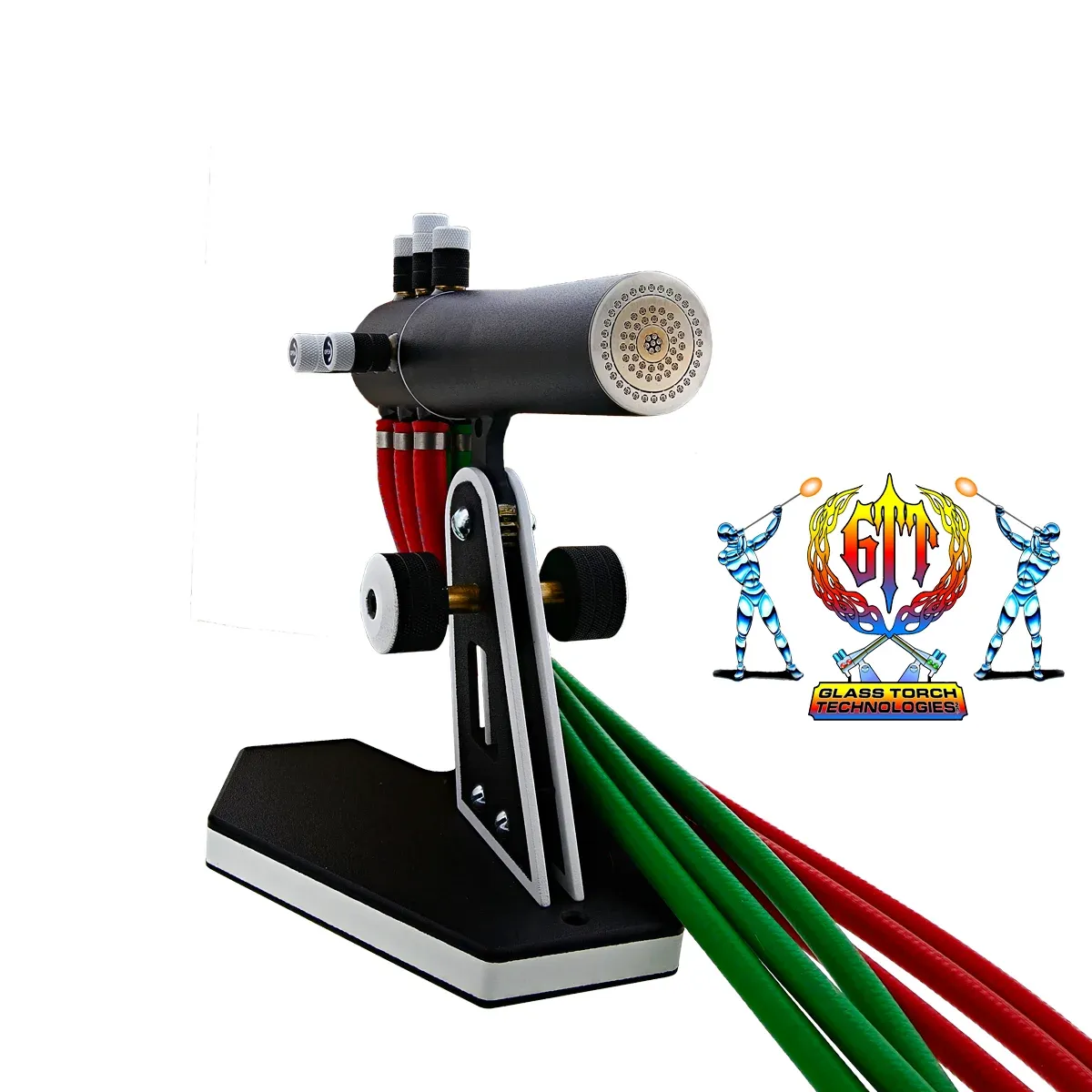 GTT Samurai Bench · Surface mix
- Oxygen
- n/a
- Skill
- Advanced
- Price
- $4,000
- GTT Viper Bench · Surface mix
- Oxygen
- n/a
- Skill
- Advanced
- Price
- $7,000
- GTT Cobra Bench · Surface mix
- Oxygen
- ~65 LPM
- Skill
- Advanced
- Price
- $5,500
- GTT Quadzilla Bench · Surface mix
- Oxygen
- n/a
- Skill
- Advanced
- Price
- Pro ($$$$)
Related guides
- Bethlehem Bravo vs GTT Phantom: Which Production Bench Burner? Bethlehem Bravo vs GTT Phantom compared: jets, oxygen appetite (30 vs 16.5 LPM), fuels, flame character, and price for two production bench burners.
- Bethlehem Champion vs GTT Phantom: Production Boro Torch Comparison Bethlehem Champion vs GTT Phantom: two two-stage surface-mix bench torches for production boro. Specs, flame character, and honest trade-offs by use case.
- Carlisle Black Widow vs GTT Delta Elite: Flexibility vs Refinement Carlisle Black Widow vs GTT Delta Elite: a swappable premix-or-surface center fire on a rotating base against a fixed 57-jet Triple Mix layered flame.
- Carlisle CC+ vs GTT Delta Elite: Two Ways to Build a Big Flame Carlisle CC Plus vs GTT Delta Elite: a hot premixed centerfire inside a soaking surface-mix outer against GTT's layered 57-jet all-surface Triple Mix.
- Carlisle CC vs GTT Mirage: Two Production Torches, Two Flame Philosophies Carlisle CC vs GTT Mirage compared: the CC's hybrid premix centerfire against the Mirage's 40-jet Triple Mix surface flame, priced within about $40 of each other.
- Carlisle CC vs GTT Phantom: Which Production Bench Burner Fits Your Shop? Carlisle CC vs GTT Phantom: flame character, oxygen appetite, and gas pressure compared, and why the CC needs boosted gas while the Phantom runs on house lines.
Frequently asked
- What is GTT's Triple Mix, and which torches have it?
- Triple Mix is GTT's patented development of surface mixing, which the company says produces a wider and more controllable flame than a standard surface mix face. It starts at the Lynx and runs up the line from there. The two entry burners, the Bobcat and the Cricket, are standard surface mix without it, and the Sidewinder is built around a center fire that can be specified either way. Configurations do change, so confirm the center fire a current model ships with directly with GTT.
- Which GTT torch should a beginner look at?
- The Cricket and the Bobcat are the two at that end of the line. The Cricket is the cheaper of the pair at $255 on GTT's site, a 5 jet burner designed around a single 5 LPM oxygen concentrator and pointed at soft glass. The Bobcat is $275 with 7 jets, and GTT says it runs well on a 5 LPM concentrator, is optimal on 8 LPM and does extremely well on 10 LPM or tanked oxygen, which is why it is the usual pick for someone who expects to move into borosilicate. The honest trade-off is money and reach: both cost more than the cheapest way into the craft, and the Cricket in particular is a small flame you will outgrow if you go large. Check the current price and options with GTT.
- Do GTT torches run on natural gas?
- Yes. Every GTT model in our catalog lists both propane and natural gas. The reason many of them work on an unboosted house line is pressure: GTT torches run on fuel pressure as low as 1/4 psi, which is inside what ordinary household natural gas service delivers. Natural gas is less concentrated than propane, and GTT's own flow guidance puts natural gas consumption at roughly 2.5 times the propane figure, so expect to open the fuel further for the same flame. Pipe size, run length and local supply decide whether it works at your bench, so confirm the pressure your model wants with GTT and with its manual.
- How much oxygen does a GTT torch need?
- Treat it as a sizing estimate, not a spec. The oxygen column in the table above holds one figure per model, converted from GTT's own flow rate chart at the largest usable flame on propane, so it is a ceiling rather than what you draw at a working flame. The Lynx sits at about 9.5 LPM and the Delta Elite at about 30 LPM, which is roughly the distance between a one concentrator torch and a tanked or multi concentrator setup. Natural gas runs about 2.5 times that consumption. A few of the largest burners carry no estimate because no figure for them has been published. Ask GTT for the current chart covering the exact model and options you are pricing.
- Which GTT torches come as hand torches?
- In our catalog the Delta Elite and the Sidewinder are the models recorded as sold either way, bench or hand. GTT sells the Sidewinder as a hand torch with an on/off switch in the handle and as 2 and 4 stud bench versions at the same list price, and it sells a Delta Elite hand torch separately from the standard four stud bench model, priced on its own. GTT also offers the Phantom as a hand torch with a thumb switch for the outer flame, with the bench version as the primary product. The rest of the line is bench mounted. Mount and switch options change, so confirm the configuration with GTT.
- Where are GTT torches made?
- In Tioga, Pennsylvania. GTT says it machines, builds and tests its torches by hand there, and that its Triple Mix and 4-Way Mix technologies are covered by its own patents. We have not found a founding year we would stand behind, so we do not publish one. For current build, option and lead time details, GTT's own site is the place to check.
- What is the GTT Quadzilla?
- It is the top of the line, a four stage Triple Mix torch that GTT builds to order rather than stocking. Because each one is configured for the buyer, the jet count varies and GTT publishes no list price for it; powder coating and a compressed air option are among the choices. Any firm Quadzilla figure you see quoted is a quote for one specific build, not a list price. If you are considering one, that specification conversation is with GTT.
- How do GTT and Nortel torches compare?
- They answer different questions rather than beating each other. The Nortel bench line is the traditional route into soft glass and its Minor class burners are the usual reference point for a single oxygen concentrator, while the GTT line is built around borosilicate and production, with Triple Mix from the Lynx upward and multi stage burners that scale much larger. The price ranges overlap only at the bottom. We keep head to head guides for the pairs people actually cross shop, including the Bobcat against the Nortel Minor and the Phantom against the Red Max, and we do not declare an overall winner, because the right answer depends on your glass, your oxygen supply and your budget. For current GTT specs and prices, go to GTT.
Manufacturer profiles are compiled from publicly available information and are our own editorial summary. Catalog specs are being verified; confirm details with the maker before buying. Torch illustrations are stylized, not product photos.