Nortel Manufacturing Torches
Nortel · Canada · Founded 1967 · Active
Canadian surface-mix bench burners plus specialized hand torches.
- Surface-mix mounted line
- Modular top burners
- Premix scientific hand torches
Nortel Manufacturing says it was established in 1967 in Toronto by founder and inventor Peter Norton. Our catalog carries sixteen current Nortel models, seven mounted bench burners and nine hand torches, covering artistic, scientific, and high-temperature work. If you are trying to work out which one to buy, the table below is the fast answer and the sections under it explain how the line is arranged.
Lineup at a glance
Every current Nortel model in our catalog, cheapest first. Figures come from the manufacturer's own pages and manuals where we have them, and are labelled as estimates where they are ours. Oxygen is a rough sizing estimate, not a spec.
| Model | Stages | Jets | Oxygen (estimate) | Price | Mix |
|---|---|---|---|---|---|
| Nortel Twin Fuel Handtorch | 1 | Not published | Not published | $110 | Premix |
| Nortel Ranger | 1 | Not published | Not published | $199 | Surface mix |
| Nortel Minor | 1 | 7 | ~9 LPM | $224 | Surface mix |
| Nortel Mega Minor | Not published | 7 | ~9 LPM | $268 | Surface mix |
| Nortel Multimix Junior | 1 | Not published | Not published | $295 | Surface mix |
| Nortel Mid Range Plus | 2 | Not published | Not published | $425 | Surface mix |
| Nortel Red Max Handtorch | 1 | 45 | Not published | $445 | Surface mix |
| Nortel Unitorch | Not published | Not published | Not published | $458 | Premix |
| Nortel Multimix 11x11 | 1 | 121 | Not published | $465 | Surface mix |
| Nortel Major | 2 | 64 | Not published | $492 | Surface mix |
| Nortel Red Max | 2 | 45 | Not published | $712 | Surface mix |
| Nortel Rocket | 2 | Not published | Not published | $1,083 | Surface mix |
| Nortel Mid Range | 1 | Not published | Not published | Mid ($$) | Surface mix |
| Nortel Unitorch-9 | Not published | Not published | Not published | Mid ($$) | Premix |
| Nortel Unitorch-12 | Not published | Not published | Not published | Mid ($$) | Premix |
| Nortel Multimix 8x8 | 1 | 64 | Not published | Mid ($$) | Surface mix |
“Not published” means the maker does not publish that figure, not that it is zero. Prices without a dollar figure show our price band instead. Confirm the current spec and price with Nortel before you buy.
Surface mix, despite the myth
A persistent piece of forum lore calls Nortel's bench burners premix. They are not: the Minor , Mega Minor , Mid Range , Mid Range Plus , Major , Red Max , and Rocket are all surface-mix mounted torches, which means fuel and oxygen stay separate inside the torch and meet at the face. That is a large part of why the entry models are such forgiving torches to learn on. Premix appears in the Nortel line only in selected hand torches, the Unitorch family and the Twin Fuel Handtorch , and in optional top-burner configurations where Nortel lists them.
The line from the Ranger to the Rocket
Nortel's line runs from a light hand torch to a two-stage production burner, and the names do not tell you where a model sits. Here is the whole current lineup, hand torches first, with what each one is for.
Among the hand torches, the Twin Fuel Handtorch is the outlier: a light premix torch with an injector-type mixer and one fingertip control, taking National-style tips, aimed at quartz and high-temperature work and at boosting a lathe. The Ranger puts the features of the Minor bench burner into a hand torch, with precision needle valves and valve bodies that rotate to suit the operator. The Multimix Junior is a stainless surface-mix hand torch with the flame character of the Mid Range burner: a tight pattern, fine control valves, light in the hand. The Red Max Handtorch carries the same 45-port flame pattern as the Red Max bench head, with a flame up to 1.25in and a wooden grip, and it is the one to reach for on borosilicate. The Unitorch is the scientific premix hand torch, six stainless tips, listed by Nortel for lathe work, dewars, fritted discs, round bottoms, ring seals, graded seals, glass-to-metal seals, and flame cutting on 40 mm quartz or 75 mm borosilicate standard-wall tubing; the Unitorch-9 is the same idea with nine tips and roughly 20 inches of length, so the operator can stand back from the fire, and the Unitorch-12 carries twelve tips on a stainless manifold at about 2 lb. The two large Multimix hand torches are pattern torches: the Multimix 8x8 is 64 orifices on the same head as the Major, and the Multimix 11x11 is the bigger 121-orifice sibling.
On the bench, the Minor is the starting point and the model the rest of the line is described against: a single-stage, 7-port surface-mix burner with a flame from 1/8in to 3/4in, built for beads, small sculpture, and marbles up to about 3in. The Mega Minor is its hotter twin, the same 7-port face with slightly larger ports, a flame up to 7/8in, and enough reach to work borosilicate while still behaving on soft glass. The Mid Range is a single burner with a flame up to an inch across for larger soft glass and sculpture, and Nortel says three concentrators are required for optimum performance. Fit a Minor or Mega Minor on top of it and it becomes the Mid Range Plus, a two-burner setup Nortel says can run both burners at once. The Major steps up to a 64-port bottom head with a bushy flame up to 1.5in and a Minor top fire on independent valves, which is where the line starts to suit serious borosilicate work. The Red Max pairs a lower head Nortel labels 45-port with a Minor, Mega Minor, or premix top, and is a favorite for large soft glass and inside-out work. At the top of the mounted range, the Rocket adds a separately controlled center-fire jet, a flame from small to roughly 2in wide, and geared tilt control, with an optional premix accessory burner and a foot pedal; it is an advanced torch for large boro and production.
Running a Nortel torch
Fuel first. Every current Nortel model in our catalog lists both propane and natural gas, and the Twin Fuel Handtorch is the only one whose record adds hydrogen, through twin fuel valves that Nortel says allow varied combinations with oxygen. Do not assume the rest of the line takes hydrogen because one page implies it does.
Oxygen is a sizing estimate here, not a spec. Our catalog carries a figure for only two models, the Minor and the Mega Minor at about 9 LPM each, and that figure is our own placement at the largest usable flame rather than a Nortel number. Nortel does not publish an LPM figure for the rest of the line, so those rows read Not published rather than a guess. The one supply statement Nortel makes on a current product page in our records is on the Mid Range, where the company says three concentrators are required for optimum performance.
Pressures are published per model, and Nortel's numbers are low. Its Major page suggests propane at 2 to 6 psi, natural gas at 1/4 to 2 psi, and oxygen at 5 to 8 psi; the Rocket page suggests fuel at 2 to 6 psi and oxygen at 7 to 15 psi; the hand torches are listed at roughly .25 to 5 psi gas and 5 to 15 psi oxygen. Treat the manual that came with your torch as the authority over any figure repeated on the internet, this page included.
Premix appears only where Nortel puts it. The Red Max page lists a premix top as one of its three top-burner options, the Rocket page lists an optional premix accessory burner with a quiet multi-orifice tip that takes National-style tips, and the Mid Range Plus page lists only Minor and Mega Minor tops. Everything else on the bench is surface mix.
For safety, fit the flashback protection your torch and your gas supply call for, following Nortel's instructions for your model rather than a rule of thumb, and pair it with a regulator suited to your gas. Specs and options change, so confirm the current numbers with Nortel before you buy.
Known source conflicts
Nortel calls the Red Max lower head a 45-port burner, but the same page describes rings of 16 and 27 ports, which total 43. We list Nortel's stated headline figure and note the discrepancy. The Red Max page also carries a blanket line about Nortel torches running hydrogen that individual product pages contradict, so we record hydrogen only for the Twin Fuel Handtorch. And Nortel publishes no jet count for the Mid Range on its current product page, so we carry none rather than repeat an older figure.
The Nortel torch lineup
-
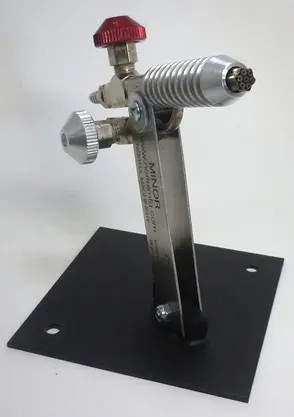 Nortel Minor Bench · Surface mix
- Oxygen
- ~9 LPM
- Skill
- Beginner, Intermediate
- Price
- $224
-
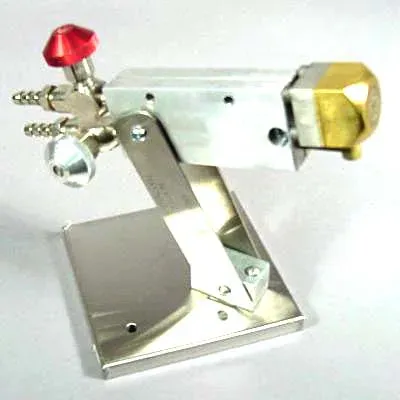 Nortel Mid Range Bench · Surface mix
- Oxygen
- n/a
- Skill
- Beginner, Intermediate
- Price
- Mid ($$)
-
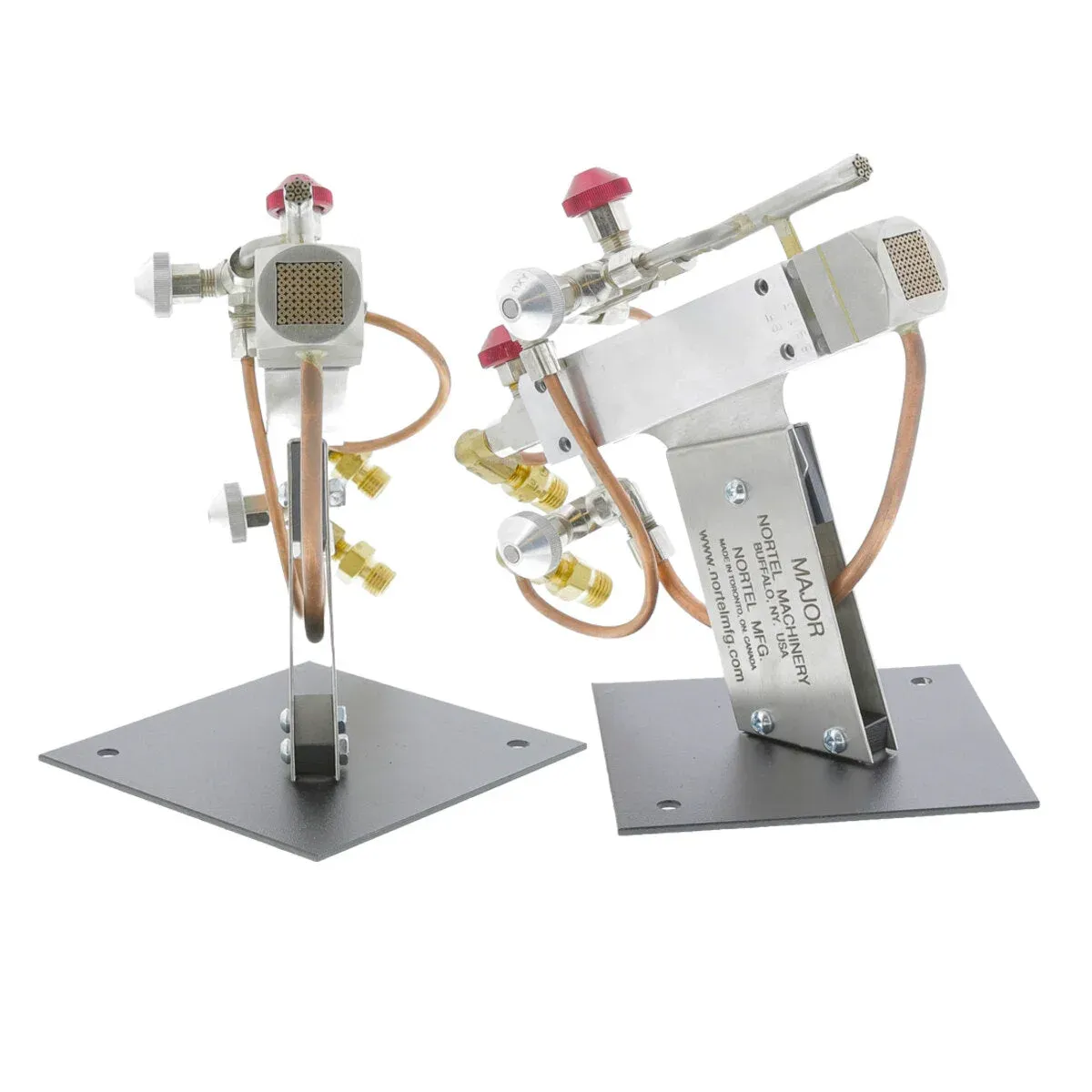 Nortel Major Bench · Surface mix
- Oxygen
- n/a
- Skill
- Intermediate
- Price
- $492
-
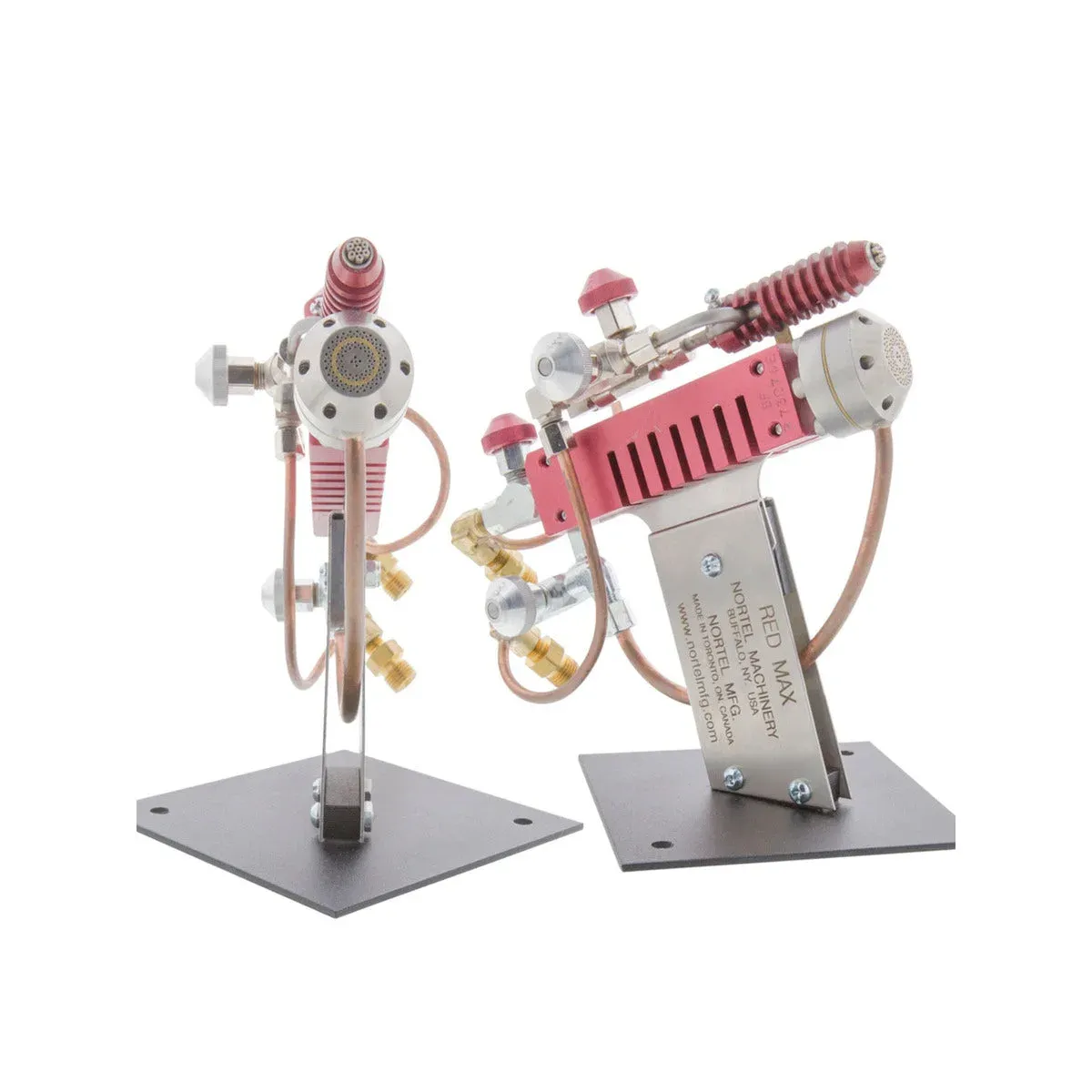 Nortel Red Max Bench · Surface mix
- Oxygen
- n/a
- Skill
- Intermediate
- Price
- $712
-
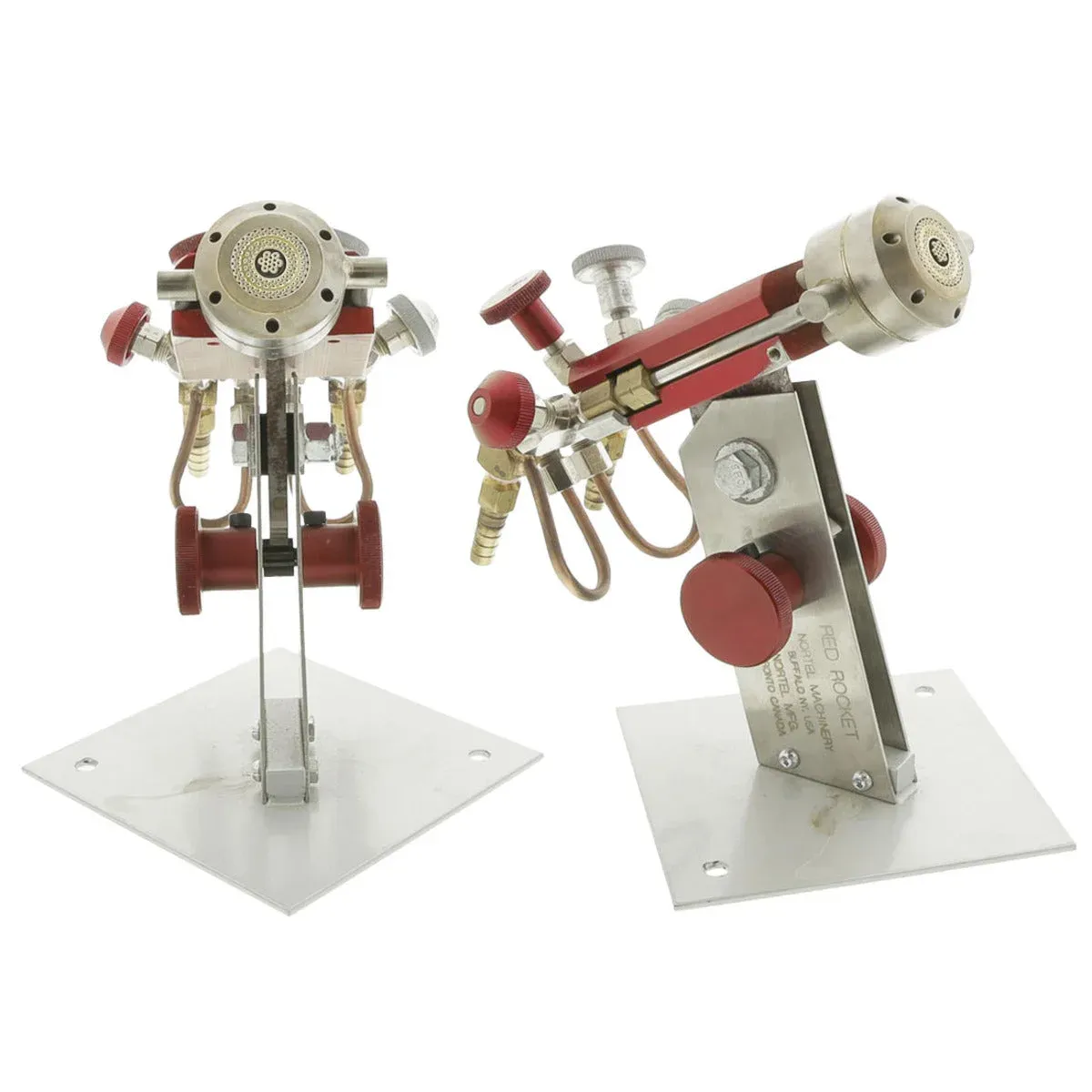 Nortel Rocket Bench · Surface mix
- Oxygen
- n/a
- Skill
- Advanced
- Price
- $1,083
-
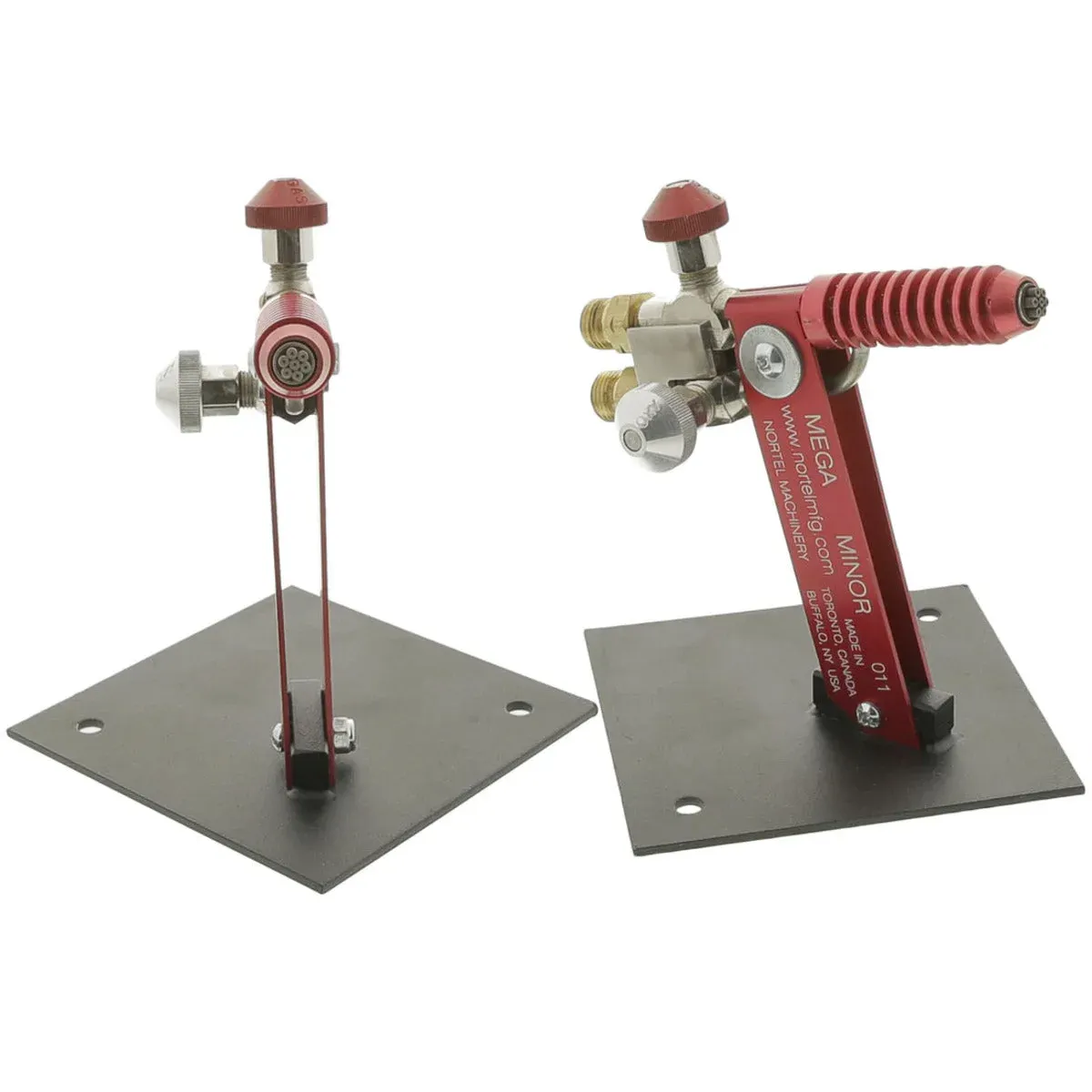 Nortel Mega Minor Bench · Surface mix
- Oxygen
- ~9 LPM
- Skill
- Beginner, Intermediate
- Price
- $268
- Nortel Unitorch Hand · Premix
- Oxygen
- n/a
- Skill
- Intermediate, Advanced
- Price
- $458
- Nortel Unitorch-9 Hand · Premix
- Oxygen
- n/a
- Skill
- Intermediate, Advanced
- Price
- Mid ($$)
- Nortel Unitorch-12 Hand · Premix
- Oxygen
- n/a
- Skill
- Intermediate, Advanced
- Price
- Mid ($$)
-
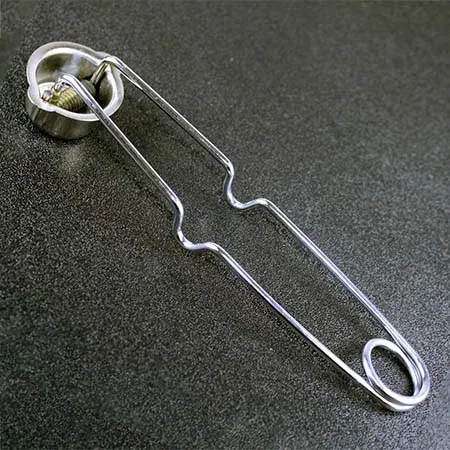 Nortel Mid Range Plus Bench · Surface mix
- Oxygen
- n/a
- Skill
- Intermediate, Advanced
- Price
- $425
-
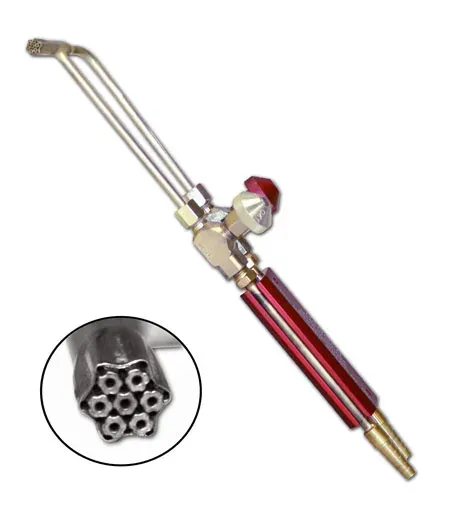 Nortel Ranger Hand · Surface mix
- Oxygen
- n/a
- Skill
- Beginner, Intermediate
- Price
- $199
-
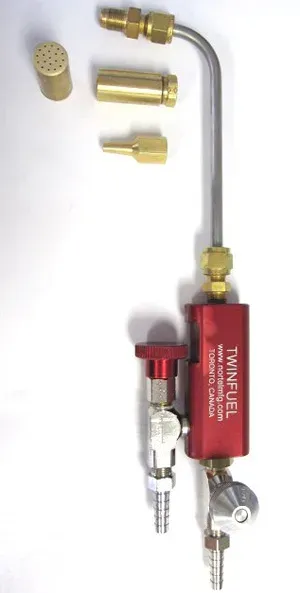 Nortel Twin Fuel Handtorch Hand · Premix
- Oxygen
- n/a
- Skill
- Intermediate, Advanced
- Price
- $110
- Nortel Red Max Handtorch Hand · Surface mix
- Oxygen
- n/a
- Skill
- Intermediate, Advanced
- Price
- $445
-
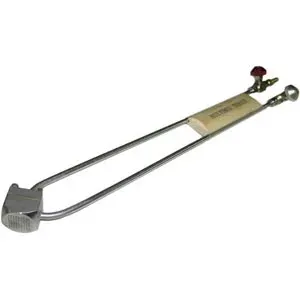 Nortel Multimix 8x8 Hand · Surface mix
- Oxygen
- n/a
- Skill
- Intermediate, Advanced
- Price
- Mid ($$)
-
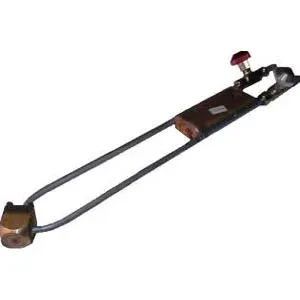 Nortel Multimix Junior Hand · Surface mix
- Oxygen
- n/a
- Skill
- Beginner, Intermediate
- Price
- $295
- Nortel Multimix 11x11 Hand · Surface mix
- Oxygen
- n/a
- Skill
- Intermediate, Advanced
- Price
- $465
Related guides
- Bethlehem Alpha vs Nortel Mega Minor: Entry Surface-Mix Bench Torches Compared Bethlehem Alpha vs Nortel Mega Minor: two entry-band surface-mix bench torches for beginners. The Mega Minor is the value pick; the Alpha is a slightly larger step.
- Bethlehem Alpha vs Nortel Minor: Two Entry Surface-Mix Bench Torches Bethlehem Alpha vs Nortel Minor compared: two entry-band surface-mix bench torches for beginners. The Minor is the cheaper studio classic; the Alpha adds fuel flexibility.
- Bethlehem Bravo vs Nortel Red Max: Cross-Brand Bench Torch Comparison Bethlehem Bravo vs Nortel Red Max compared: both surface mix, two stages, but different jets, flame width, price, and the Red Max's modular top fire.
- Bethlehem Sharp Flame Hand Torch vs Nortel Ranger: Two Entry Hand Torches Compared Bethlehem Sharp Flame Hand Torch vs Nortel Ranger: a defined six-jet boro-assembly hand torch against a Minor-in-the-hand generalist. Price, flame, and fit.
- Bethlehem Star vs Nortel Mega Minor: Which Step-Up Bench Torch to Buy Bethlehem Star vs Nortel Mega Minor compared: two surface-mix bench torches a step above the smallest. The Star buys more heat; the Mega Minor is the value pick.
- Carlisle C-705 Hand Torch vs Nortel Red Max Handtorch: Configurable or Fixed Carlisle C-705 Hand Torch vs Nortel Red Max Handtorch: an adjustable, build-to-order CC-style hand torch against a fixed 45-port surface-mix hand torch for boro.
Frequently asked
- Which Nortel torch should a beginner buy, the Minor or the Mega Minor?
- Either is a sound first bench torch, and the honest answer depends on the glass you want to work. Both are single-head, 7-port surface-mix burners with the same reputation for surviving anything a beginner does to them. The Minor is the cheaper of the two, about $224 in our catalog, with a flame from 1/8in to 3/4in that suits beads, small sculpture, and marbles up to roughly 3in. The Mega Minor is about $268 and uses slightly larger ports that Nortel says run hotter and use oxygen more efficiently, with a flame up to 7/8in, which is what makes it the better pick if you already know you want borosilicate. If you are working soft glass and want the lowest-risk start, take the Minor. Prices and options move, so confirm the current figures with Nortel.
- Is the Nortel Minor surface mix or premix?
- Surface mix. Fuel and oxygen stay separate inside the Minor and only combine at the 7-port face, which gives it the clean, quiet flame it is known for. This one trips up a lot of buyers, because forum posts often call the Minor a premix torch: every current Nortel bench burner in our catalog is surface mix, the Minor included. Premix shows up in the Nortel line only in selected hand torches, the Unitorch family and the Twin Fuel Handtorch, and as an optional top burner where Nortel lists one. If a listing tells you otherwise, check it against Nortel.
- How much oxygen does a Nortel Minor need?
- Nortel does not publish an LPM figure for the Minor, so treat any number, ours included, as a sizing estimate. Our catalog places it at about 9 LPM, and that is a ceiling at the largest usable flame rather than what a small bead flame draws, so smaller work pulls considerably less. Nortel says the Minor runs on bottled oxygen or a concentrator without stating a size in the materials we have. In practice you size the supply to the flame you actually run, and if you expect to work near the top of the Minor's range, plan for more oxygen than one small concentrator delivers. Confirm the setup with Nortel before you commit to a supply.
- What is the difference between the Nortel Minor and the Mega Minor?
- They are the same 7-port surface-mix bench burner with different port sizing. The Mega Minor's ports are slightly larger, which Nortel says gives hotter temperatures and more efficient oxygen use, and its flame runs from a needle point up to 7/8in against the Minor's 1/8in to 3/4in. That extra reach is why the Mega Minor is described as good for borosilicate while still being at home on soft glass, and why it is often the top fire on a Red Max. Neither is a large-boro torch. Our catalog prices them at $224 and $268; check today's numbers with Nortel.
- Nortel Minor or Red Max?
- They sit at opposite ends of the bench line. The Minor is a single-stage 7-port burner for beads and small work at about $224. The Red Max is a two-stage torch at about $712 that pairs a lower head Nortel labels 45-port with a Minor, Mega Minor, or premix top, so you get a large soft-glass flame and a small detail flame on independent valves, which is what makes it a favorite for inside-out work. Take the Red Max if you have outgrown a small flame or work large soft glass; take the Minor if you are starting out. We keep a full Red Max versus Minor comparison in our guides, and the current specs are worth confirming with Nortel.
- What does the Nortel Mid Range Plus add over the Mid Range?
- A second burner. The Mid Range on its own is a single bench burner with a flame up to an inch across, and Nortel says three concentrators are required for optimum performance. The Mid Range Plus is that same burner with a top-mounted Minor or Mega Minor, and Nortel says both burners can run at the same time, which gives you a broad flame for bulk heat and a small one for detail without switching torches. Nortel's Mid Range Plus page lists only the Minor and Mega Minor as tops. Our catalog carries no price for the standalone Mid Range and lists the Plus at $425, so confirm the configuration and the price with Nortel.
- Do Nortel torches run on natural gas?
- Yes. Every current Nortel model in our catalog lists natural gas as well as propane, and the pressures Nortel suggests are low: its Major page, for example, suggests natural gas at 1/4 to 2 psi against 2 to 6 psi for propane. Whether an unboosted house line actually feeds your torch depends on your pipe size, the length of the run, and what your utility delivers, which is a plumbing question more than a torch question. Natural gas is also less concentrated than propane, so expect to open the fuel valve further for the same flame. Confirm the pressure your model wants with Nortel and with its manual.
- Where are Nortel torches made?
- In Toronto, Canada. Nortel Manufacturing says it was established there in 1967 by founder and inventor Peter Norton, and it still builds the mounted burners and hand torches in our catalog. We publish nothing about current lead times or build options, because those change; Nortel is the place to check both.
Manufacturer profiles are compiled from publicly available information and are our own editorial summary. Catalog specs are being verified; confirm details with the maker before buying. Torch illustrations are stylized, not product photos.